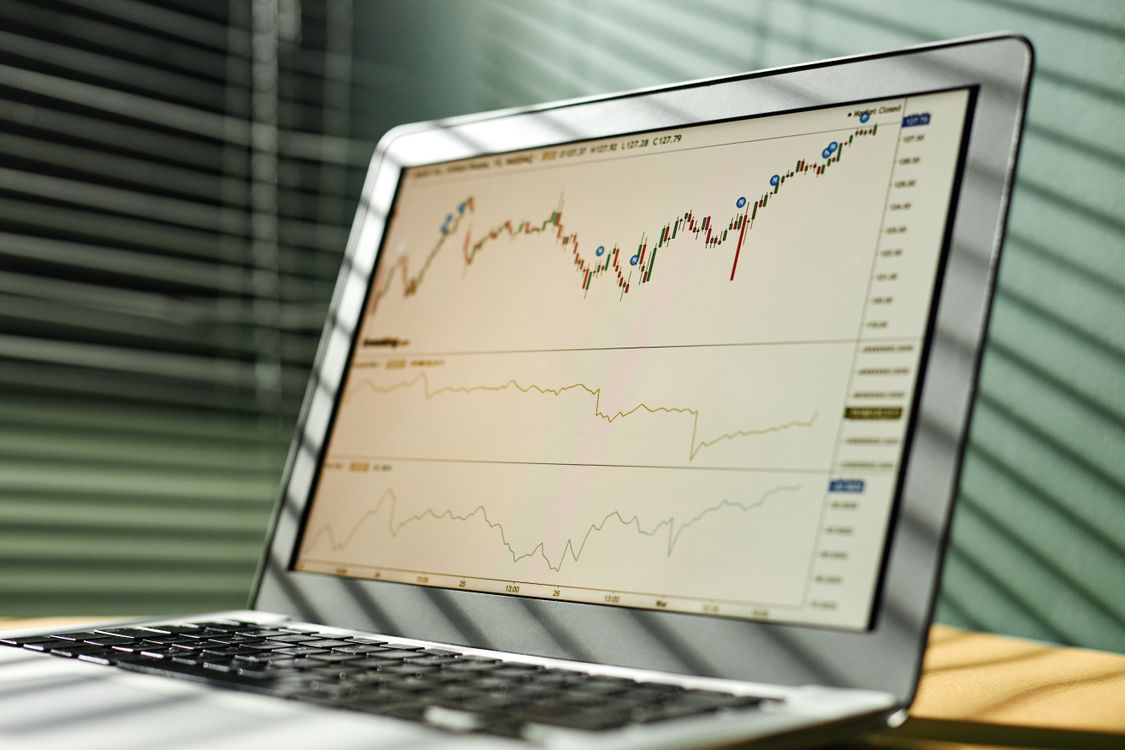

Some weeks the market drifts. This is not one of those weeks. Between Monday morning and Friday’s closing bell, the calendar is packed with the kind of events that move mortgages, retirement accounts, and the price of everything — and most of them will be decided before lunch. Let me walk you through it, day by day, the way I’d walk a friend through a busy week: here’s what’s happening, here’s why it matters, here’s what to watch.
Wednesday is the main event. At 2 p.m. Eastern, the Federal Reserve announces its interest-rate decision, and at 2:30, Chair Kevin Warsh faces the press. Seeking Alpha’s week-ahead briefing frames it plainly: investors are awaiting what would be the central bank’s first rate increase of the current cycle, with federal funds futures implying an 85 percent probability of a quarter-point hike. Other readings put it at 87 to 90 percent. The direction is not in doubt. The questions are the size, the statement, and — most importantly — what Warsh says about what comes next.
Wednesday morning brings the opening act: August retail sales, released before the Fed decision. In a week like this, the retail number isn’t just data — it’s the final piece of evidence the market will chew on before the announcement. Strong sales would confirm the consumer is still spending through the inflation; weak sales would raise the question the Fed dreads: what if we’re hiking into a slowdown? Either way, by Wednesday afternoon, we’ll know the price of money for the foreseeable future, and every mortgage rate, auto loan, and credit card in America will begin adjusting.
Wednesday also belongs to enterprise software. Salesforce holds its investor day and analyst session during its Dreamforce event — a moment when one of the defining companies of the cloud era tells Wall Street where it’s going next. In a year when software stocks just hit an all-time high (the State Street Software and Services ETF rose 5.2 percent Thursday to a new record, per Axios), Salesforce’s guidance will be read as a verdict on whether the AI-driven software revival has legs or is running on fumes.
Thursday is the world day. The Bank of England announces its latest policy decision — another central bank, another verdict on inflation, another data point in the synchronized global tightening we’ve been tracking all week. And the Securities and Exchange Commission holds a roundtable on preparations for 24-hour trading, with major exchanges, brokers, and market makers participating.
Stop on that one for a moment, because it’s bigger than it sounds. The stock market has always slept — evenings, weekends, holidays, the whole human rhythm of rest. A move to 24-hour trading would end that. Crypto already trades around the clock, and the pressure to let stocks do the same has been building for years. Thursday’s roundtable is where the plumbing gets discussed: how clearing works at 3 a.m., who makes markets when New York sleeps, what happens to the opening bell as a cultural institution. For ordinary investors, the practical question is whether you’ll be expected — by your apps, your advisors, your own anxiety — to watch your money at midnight. The market never sleeping sounds like progress until you’re the one who can’t.
Friday brings two endings. First, the Bank of Japan is expected to raise rates by a quarter point to 1.25 percent — markets price the odds at 97 percent — closing out the week’s central-bank trilogy. By Friday evening, we’ll know what the Fed, the Bank of England, and the Bank of Japan all did, and the global cost of money will be reset for the fall.
Second, Friday brings triple witching — the quarterly expiration of stock index futures, stock index options, and stock options, all on the same day. It’s one of the highest-volume trading days of the quarter, when trillions in derivatives settle and markets can swing on technical flows that have nothing to do with fundamentals. If your portfolio lurches on Friday afternoon, check the calendar before you check your convictions. It might just be the witching.
Around the edges of the calendar, the professional investors are watching their own signals. Seeking Alpha’s insider-watch flags significant buying and selling this week at Nvidia, Tesla, and Uber — when insiders move, it’s worth asking what they know. And in the “consumer experience” corner, one investing group sees opportunity in asset-light travel and entertainment names — Live Nation, Expedia, Booking Holdings, Airbnb — and has initiated positions in Alaska Air, Delta, Carnival, and Viking, as rising fuel prices pushed several of these stocks below the group’s preferred discount threshold. The thesis: consumers are shifting spending from things to experiences, and the selloff in travel stocks is a sale, not a warning.
Lennar’s earnings round out the week’s corporate calendar — and in a week when home sales just hit a fourteen-month low and mortgage rates topped 7 percent, a homebuilder’s report is essential reading. Watch not just the numbers but the commentary: what Lennar says about buyer traffic, incentives, and cancellations will tell you more about the housing market’s direction than any economist’s forecast.
It’s not enough to just let this week happen to your money. It’s not enough to wake up Saturday and wonder why your portfolio moved. We must listen to the calendar — really listen, the way you’d listen to a weather forecast before a long drive — learn what each event means for the specific financial life we’re living, and contribute our steadiness to markets that reward panic and punish patience.
Here’s my practical guidance, offered as a friend. If you have a variable-rate debt, Wednesday afternoon is your moment of truth — know your rate, know your reset, and have a plan. If you’re a long-term investor, treat triple-witching Friday as noise; the events that matter are the central banks, and their effects play out over months, not minutes. If you’re watching the 24-hour-trading discussion, ask yourself honestly whether more access to the market would make you a better investor or just a more anxious one. (For most of us, the answer is the second one, and the closing bell is a feature, not a bug.)
Five days. Three central banks. One market that might never sleep again. A homebuilder, a software giant, and the quarterly reckoning of the derivatives market. The fall of 2026 starts this week — not with a single thunderclap, but with a calendar full of decisions, each one reshaping the price of money a little more.
Pay attention. Take notes. And remember the oldest wisdom in finance: the investors who do best in weeks like this aren’t the ones who react fastest. They’re the ones who prepared earliest. There’s still time to be one of them.
Written from Seeking Alpha’s Wall Street Week Ahead (September 13, 2026), Finimize’s Last Call roundup, Axios Markets, and Bloomberg’s morning coverage. Dates, times, odds, and statistics are as reported by those outlets; my reflections are my own take.