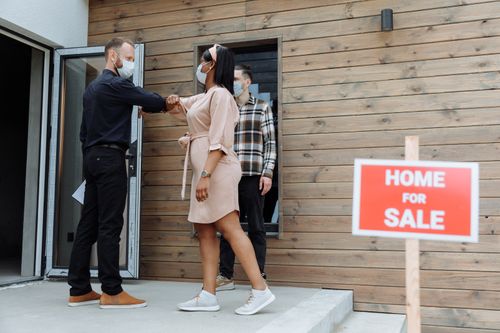

There is a particular silence that falls over a young family when they run the numbers for the third time and get the same answer. The house they want — not a mansion, not a dream home, just a three-bedroom with a yard — costs more per month than they bring home. Not because the price rose this week. Because the rate did. Again.
The average 30-year mortgage rate sits at 6.76 percent, a high for 2026. One widely watched daily measure pushed above 7 percent — the first time since May of 2025 that borrowers have seen that number. And with the 10-year Treasury now yielding 5.0286 percent, its highest since 2007, the pressure on mortgage rates points in only one direction. Every would-be buyer waiting for relief just watched the door swing further shut.
The August existing-home sales data tells the rest of the story: sales fell 2 percent for the month. This is the lock-in effect playing out in real time. Millions of homeowners hold mortgages at 3 or 4 percent and will not sell — because selling means giving up that rate and borrowing at nearly double. So listings stay scarce, prices stay sticky, and first-time buyers get squeezed from both sides: too few homes to choose from, too expensive to finance the ones that exist. It is a market frozen not by lack of desire but by arithmetic.
Shelter costs, meanwhile, keep grinding higher in the official data — up 0.3 percent in August’s inflation report. Rents are not offering an escape hatch either. The family that cannot buy does not disappear; it rents, bidding up the very shelter costs that show up in inflation data, which in turn keeps pressure on the Fed to hold rates high. It is a loop, and families are caught inside it.
Zoom out and the picture gets more sobering. Hong Kong has now been ranked the world’s least affordable housing market for sixteen straight years. Sixteen years. That is not a cycle; that is a structure. It is a warning about what happens when a housing market’s affordability crisis stops being a phase and becomes the permanent condition — when an entire generation quietly recalibrates what “home” means.
I think about a teacher friend — two incomes, stable jobs, good credit, the textbook picture of a qualified buyer. Five years ago, her family could afford the median home in their city with room to spare. Today, at these rates, the same house costs them hundreds more per month, every month, for thirty years. She is not irresponsible. She did not overspend. The math simply moved while she was doing everything right. That is the quiet cruelty of this market: it punishes patience. The longer you saved and waited, the worse the rate got.
There are real human consequences beyond the balance sheet. Household formation is delayed. Young families double up with parents. Workers turn down better jobs in more expensive cities because the housing math does not work. Labor mobility — one of the economy’s great strengths — erodes one unaffordable zip code at a time. A frozen housing market is not just a real estate story; it is a jobs story, a family story, a story about where life gets to happen.
But it’s not enough to just stare at the rate and grieve the market we wish we had. It’s not enough to treat homeownership as either a guaranteed escalator or a lost cause. We must listen to what this market is actually rewarding — flexibility, creativity, clear-eyed math — learn the real options underneath the headlines, and contribute our own honest reckoning to the conversation, because a generation making housing decisions on fantasy numbers helps no one, least of all itself.
My take: there are really two housing markets now, and the sooner we name them, the better decisions we make. There is the market for people who already own — locked in, comfortable, largely insulated. And there is the market for everyone else — renting, waiting, recalculating. Policy and commentary still speak as if there is one market; there is not. For those on the outside, the honest strategies are unglamorous: buy below your means if you buy at all, treat a starter home as a starter rather than a forever home, consider rate buydowns and shorter terms, and remember that renting while building a bigger down payment is not failure — it is strategy. A 7 percent mortgage on the wrong house is far worse than a lease on the right life.
The door is not locked forever. Rates are cyclical; demographics are not. The millennials and Gen Z buyers pressing against this market represent enormous pent-up demand, and when rates eventually ease, that demand will move quickly. The families who spent the frozen years saving, improving their credit, and understanding their true numbers will be the ones ready to walk through. The wait is painful. But waiting well is still a form of progress — and progress, even quiet progress, compounds.