Last winter I stood in a petrol station outside Leeds, watching the numbers climb on the pump faster than the fuel went into the tank. A father in front of me filled only halfway, laughed awkwardly at the cashier, and said he’d finish the job when he was paid on Friday. We all nodded like this was normal now. Half-tanks have become a kind of folk economics — you don’t need a chart to read a room full of people buying petrol by the instalment plan.
That memory keeps coming back to me this week, because the numbers on the boards are climbing again, and this time the cause isn’t an abstract line on a central bank slide. It’s an island most of us had never heard of, in a strait most of us couldn’t find on a map.
Perim Island sits in the Bab el-Mandeb Strait, the narrow throat between the Red Sea and the Gulf of Aden. For decades it was one of those places that only mattered to shipping nerds and admirals. Then, as Sam Klebanov reported in Morning Brew’s September 12 edition, Iran-backed Houthi forces seized it — and suddenly it matters to every person who drives to work, heats a home, or buys groceries delivered by truck.
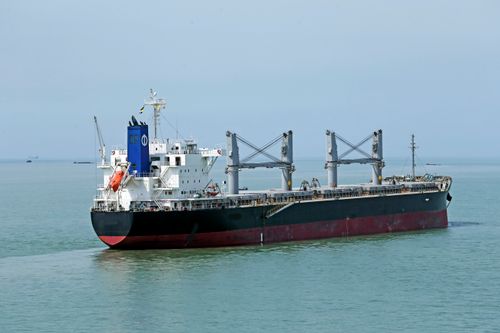
Here’s why. The Bab el-Mandeb is a vital conduit for Saudi oil shipments, and it has become more important than ever because Iran has been restricting traffic through the Strait of Hormuz, the other great chokepoint of the energy world. When one door narrows, everything squeezes through the other — and now the other door is a battleground.
The human cost is staggering, and I want to sit with it before we talk about prices, because the numbers of the wounded and the displaced are not footnotes. Klebanov reports that a ground offensive around the seizure killed 500 people and displaced 46,000, according to the UN. Behind every “supply disruption” headline there are families who have lost homes, neighbours, everything. The oil market treats war as a variable. For the people living inside it, it is not a variable at all.
But the variable is moving, fast. Saudi oil exports were down by a third in August compared with July, amid the Houthi attacks. And then, after drone strikes launched from Iraq, Saudi Arabia shut a pipeline to the Red Sea as a precaution. Think about that: the world’s most important oil exporter, voluntarily cutting one of its own escape routes because the alternative is worse. It’s not enough to just watch the price of a barrel — we must listen to what these decisions are telling us, learn how fragile the map really is, and contribute our honest attention to the consequences.
The price is doing what prices do when supply is threatened and options are shrinking. Oil passed $100 a barrel for the first time since May, up nearly 8% on the week amid the US–Iran fighting, according to Morning Brew. Reuters’ Take Five briefing for the week ahead, dated September 11, adds the broader picture: Brent crude above $100 with physical prices reportedly above $120, and European gas prices at their highest since late 2022, with winter storage sitting at 15-year lows.
That last detail deserves a pause. Fifteen-year lows, heading into autumn. In my family we used to check the oil tank in the garden every October the way other families checked the smoke alarm — a small ritual of preparedness. This year, millions of European households are doing a version of that ritual with gas storage statistics they never used to read. The cupboard is bare, and the season hasn’t even started.
And the pain is not evenly spread, which is where the community-minded part of this really bites. Seeking Alpha’s Wall Street Breakfast, in its September 11 edition, reported that the national average price of diesel in the United States surged above $6 a gallon for the first time on record — $6.05, per AAA, and approaching $8 in California. Morning Brew’s August inflation data tells the same story from another angle: gasoline prices up 3.9% in a single month and 27.4% over the past year, driven largely, as their reporter Dave Lozo noted, by the war in Iran.
Diesel is the quiet tax nobody votes for. The man who filled his tank halfway in Leeds doesn’t set the price of the bread on the shelf, but the trucker who paid record diesel prices to deliver it does. When diesel hits record highs, it shows up in food prices, in construction costs, in everything that has to travel to get to you — which is to say, everything. Finimize’s weekend preview noted that US diesel has crossed $6 a gallon nationally for the first time ever, a sentence that would have sounded like hyperbole a few years ago and now reads like a weather report.
There’s also a strange financial irony running underneath all of this. High oil prices should, in theory, be a windfall for producers. Saudi Arabia exports less oil because its shipments are under attack and its pipelines are precautionary-closed — so it sells fewer barrels even as each barrel is worth more. It’s a siege economy for the seller and a squeeze economy for the buyer. Nobody wins except the weapons makers.
Here’s my honest take, labelled as such: what worries me most is not $100 oil itself. Markets have seen triple-digit crude before, and economies have adapted before. What worries me is the map. A year ago, the Strait of Hormuz was the worry; now the Bab el-Mandeb is under hostile control too, and a Saudi pipeline to the Red Sea — built precisely to bypass these straits — is shut by precaution. The redundancy we built into the system is being used up, one chokepoint at a time. Insurance premiums for shipping through the region will climb, rerouted vessels burn more fuel and take longer, and all of that cost quietly accumulates in the price of everything before any central bank can do a thing about it.
And that brings us to the part the central banks can’t fix. The Fed is widely expected to raise interest rates this week — traders see it as nearly certain after hot August inflation data, as multiple newsletters reported. But a rate hike doesn’t reopen a strait. It doesn’t rebuild a pipeline or refill European gas storage. Monetary policy can cool demand; it cannot conjure supply. That’s the painful lesson of every energy crisis: the price signal works, eventually, but the people at the petrol pump pay the tuition.
So what do we do with this, as ordinary participants in the economy? The same thing that father at the petrol station did: we adapt, honestly, without panic. We budget a little more for the commute and the heating bill. We notice — really notice — which costs are choices and which are weather. We remember that 46,000 displaced people are the real story and the fuel price is the echo.
It’s not enough to just track the price of crude — we must listen to the communities bearing the real cost, learn how the world’s arteries actually work, and contribute whatever steadiness we can to a moment that feels anything but steady. The sea lanes will reopen one day; they always do. Until then, half a tank at a time, we get through it together.