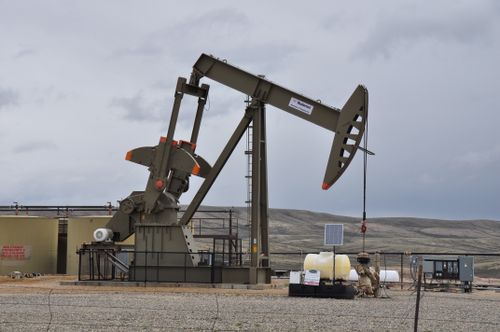

There’s a number on the gas station sign that most of us have never seen in our lifetimes, and this week it started showing up. Crude oil — the raw stuff that becomes everything from your morning commute to the diesel in the truck that delivered your groceries — climbed back above $100 a barrel for the first time since May. And unlike the last time, this one is landing directly in people’s wallets, in ways that are hard to miss and harder to ignore.
The facts, as reported across this week’s newsletters: U.S. crude futures topped $100 a barrel on Thursday, up roughly 20 percent in September alone, driven by a sharp escalation in U.S.–Iran fighting, according to Seeking Alpha’s Wall Street Breakfast on September 11. The national average price of diesel surged above $6 a gallon for the first time ever — $6.05, per AAA — and is approaching $8 in California. Morning Brew reported U.S. gasoline prices up 3.9 percent in a single month and 27.4 percent over the past year, driven largely by the war in Iran. Brent crude is up about 10 percent on the week, physical crude prices have traded above $120, and August producer prices rose 5.4 percent over the past year — the wholesale inflation that eventually becomes retail inflation.
It’s not enough to just watch the ticker and wince. We must listen to what these prices are doing to real household budgets, learn how energy costs ripple through everything, and contribute what we can — clear-eyed honesty about who’s hurting — to a conversation that too often stays abstract.
The commuter’s new math
Start with the most ordinary version of this story: someone who drives to work. Maybe it’s thirty miles each way, the kind of commute millions of Americans make without thinking twice — until the thinking becomes unavoidable. At these prices, a fill-up that used to cost sixty dollars costs eighty. That’s not a rounding error; that’s the grocery budget for a couple of days, or the copay on a doctor’s visit, or the difference between the savings account growing and shrinking that month.
Gasoline up 27.4 percent year over year means the average driver is paying more than a quarter more for the same miles. For a household already stretched — and most are, with inflation running at 3.4 percent and the Fed widely expected to hike rates again next week — the pump becomes a weekly reminder that the economy’s problems aren’t theoretical. They’re measured in gallons.
And this is the cruel part of energy inflation: you can’t easily opt out. You can delay buying a new couch. You can’t delay getting to work. Demand for fuel is what economists call inelastic, which is a bloodless way of saying that when prices rise, people mostly just pay — and cut something else.
The trucker’s burden, the business owner’s squeeze
Now widen the lens to diesel, because diesel is where this story gets serious. Diesel at $6.05 a gallon nationally — a record, the first time ever above six dollars — isn’t a commuter problem. It’s a freight problem. Nearly everything you buy traveled on a diesel truck at some point. When the fuel for that truck costs a third more than it did not long ago, the cost doesn’t vanish. It gets passed along, step by step, until it lands in the price of bread, lumber, and school supplies.
Think about the independent trucker — the owner-operator with one rig, or two, running routes they’ve run for years. Fuel is their single biggest variable cost. A spike like this doesn’t just dent their profit; for some, it erases it. They can’t renegotiate every contract overnight. They burn the expensive fuel today and hope the rates catch up tomorrow. Some won’t make it to tomorrow.
Or think about the small business owner who runs a delivery operation — the bakery with three vans, the landscaping company with a fleet of trucks, the rural hardware store that depends on freight deliveries to keep shelves stocked. Seeking Alpha’s Wall Street Breakfast flagged exactly these pressure points: heating-oil states like Maine and farm states like Ohio, Kansas, and Iowa, where fuel isn’t a luxury but the operating system of daily life. For these businesses, $100 oil isn’t a headline. It’s a line item that’s suddenly eating the margin they were counting on for the holidays.
This is my take, and I’ll label it as such: the diesel number scares me more than the crude number. Crude at $100 is dramatic. Diesel at $6 is structural. It means the cost of moving things — which is the cost of the economy itself — has reset higher, and resets like that have a way of sticking around in prices long after the barrel comes back down.
How we got here
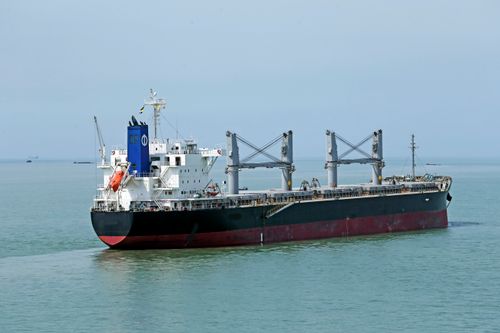
The immediate cause is geopolitical, and it’s worth saying plainly: the U.S.–Iran escalation has put one of the world’s most important energy chokepoints under threat. Morning Brew reported that Iran-backed Houthis seized Perim Island in the Bab el-Mandeb Strait — a vital conduit for Saudi oil shipments that has grown more important as Iran restricts traffic through the Strait of Hormuz. Saudi oil exports were down by a third in August versus July. A Yemeni ground offensive killed 500 people and displaced 46,000, according to the UN. When the market sees supply routes under fire, it prices in the risk — and right now, it’s pricing in a lot of it.
But there’s a second layer: this oil shock is landing on an economy already running hot. August consumer prices rose 3.4 percent over the past year. Producer prices — the wholesale costs businesses pay — rose 5.4 percent. The Fed is now widely expected to raise interest rates next week for the first time in three years. Energy is the spine of inflation: when fuel costs rise, they don’t just raise the price of gas. They raise the price of making and moving everything, which is why central bankers watch oil the way sailors watch the sky.
There’s even a glimmer of diplomacy in the mix: the FT reported September 11 that Gulf foreign ministers could meet Iranian counterparts to discuss temporary shipping arrangements in the Strait of Hormuz, and oil prices fell more than 2 percent on the news. Markets are desperate for any sign of de-escalation. Whether talks materialize — and whether they hold — is anyone’s guess.
What it means for the weeks ahead
Here’s the honest accounting. If you’re a household, the playbook is the unglamorous one: the fuel budget needs more room, which means something else gets less. There’s no clever hack for $6 diesel or $100 crude — just the quiet arithmetic of making it work, the kind millions of families are already doing.
If you’re a business that lives on fuel or freight, the question is how fast you can pass costs through without losing customers — and whether your cash cushion survives the lag. The businesses that make it through energy shocks are usually the ones that were disciplined before the shock arrived.
And if you’re watching the broader economy, connect the dots the Fed is connecting: energy-driven inflation makes the central bank’s job harder, not easier. A rate hike next week — now priced at roughly 85 to 90 percent odds — would raise borrowing costs across the economy at exactly the moment fuel costs are squeezing cash flow. That’s the bind: the medicine for inflation can deepen the pain it’s meant to cure.
But let me end where I started — with the people, not the prices. Behind every gallon is a choice someone made: to drive to the job, to deliver the goods, to keep the small business running one more month. Those choices are acts of faith in the future, made under pressure most of us didn’t choose. The least we can do — those of us who write and read about markets — is to keep those people at the center of the story, not the barrel price.
Energy markets will do what they do: spike, settle, spike again. What matters is whether the rest of us remember that every number on the sign is someone’s budget, someone’s business, someone’s week. Listen to that, and the numbers start to mean something worth acting on.
Facts in this article are drawn from Seeking Alpha’s Wall Street Breakfast (Sept 11, 2026), Morning Brew (Sept 12, 2026), Finimize’s weekend preview (Sept 12, 2026), Reuters’ “Take Five” (Sept 11, 2026), and FT reporting via Reuters (Sept 11, 2026). Interpretations are the author’s own.