
Let me tell you about a company most of us know the way we know the name on the side of a roadside truck — vaguely, in passing, without thinking much about it. Generac. If you’ve ever driven past a suburban home after a storm and heard that low, steady hum keeping the lights on while the neighborhood sat dark, odds are you’ve heard a Generac. For decades, this has been the company America calls when the grid fails: home backup generators, commercial standby power, the machines that hum when everything else goes quiet.
Quiet was fine — until Thursday, when the whole market started humming along. Generac signed a long-term deal worth up to $8 billion to supply backup generators for Amazon’s data centers, and its shares surged 18.3% in a single trading day to $207.23 — the best performance of any stock in the entire S&P 500. Let that image settle: a maker of backup generators, not a chip designer, not a cloud software darling, but a generator company — and on this day it outshone every glamorous name on the index.
Now, I want to slow down and walk you through the deal itself, because the details are where the real story lives. According to Generac’s regulatory filing, Amazon has committed to initial generator deliveries worth $2.4 billion across 2027 and 2028 — roughly $1.2 billion a year. To put that in human terms: Generac’s entire revenue for 2025 was about $4.2 billion. So a single customer is about to hand this company nearly a third of its annual sales, every year, just for starters — and the total agreement could grow to $8 billion over time, across Generac and its global affiliates.
Think about that the way a small business owner would. Imagine you run a bakery that does $4,000 a year in sales, and one morning a hotel chain walks in and says: “We’ll take $1,200 worth of bread every year, and maybe $8,000 total over the next several years.” You’d need a bigger oven. You’d need more hands. Your whole world would change — overnight. That’s Generac this week.
The deal has another layer that savvy investors should notice: Amazon didn’t just place an order — it took an ownership stake in the relationship. Generac issued an Amazon subsidiary a warrant for up to 1.69 million Generac shares at $200.93 each. That’s roughly 3% of the company, worth around $340 million at current prices. About 308,000 of those shares vested immediately; the rest vest in stages, tied to how much Amazon actually buys, up to the $8 billion threshold. The warrants are exercisable through September 2033, for cash or cashless. In plain language: Amazon is putting its own money where its data centers are. When a customer this big locks in with warrants, it’s not a fling — it’s an engagement.
Wall Street read it that way, too. The stock had already spiked more than 40% in after-hours trading Wednesday when the news broke — one of those moments where the overnight tape tells you the morning will be loud. By Thursday’s close, Canaccord’s George Gianarikas had raised his price target on Generac to $375 from $275, a vote of confidence that the market’s enthusiasm has real foundations. Even Amazon’s own shares rose 1.6% on the day — a reminder that the market likes this deal from both sides.
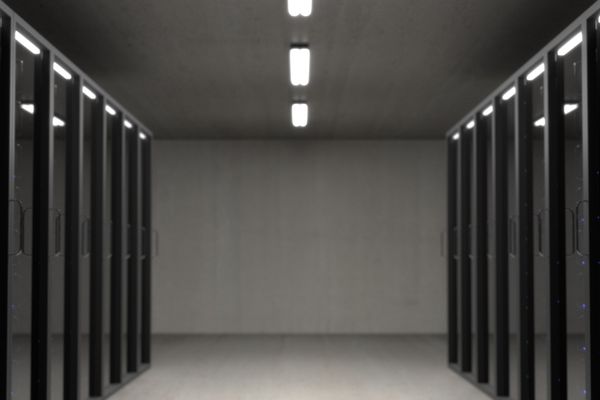
But here’s where the story widens, and where it gets personal for every one of us. Why does Amazon — the everything store — need billions of dollars in backup generators? Because of artificial intelligence, and the insatiable appetite of the data centers that power it. Every time someone asks an AI assistant a question, every time a model trains on mountains of data, servers burn electricity at a staggering rate. The AI boom isn’t just code and cleverness; it’s physical. It’s concrete, copper, cooling — and power. Lots of power. Data centers can’t blink. A millisecond of downtime in a facility training the next great model is money evaporating. So Amazon is buying the guarantee that the lights never go out.
This is the part of the AI story nobody puts on a billboard, but it might be the most important part for ordinary investors: the great wealth transfer happening beneath the headlines. Market watchers have described it as a generational money flow from the hyperscalers — Amazon, Alphabet, Meta, Microsoft, Oracle — into the chipmakers and equipment suppliers: Nvidia, Broadcom, Applied Materials, Micron. The Generac deal is the same current flowing somewhere new. The money isn’t only going to the companies that design intelligence; it’s flowing to the companies that keep the buildings powered while intelligence gets built. It’s an echo boom — and as one observer noted, the AI-driven capital-markets dash involving names like Alphabet, Nvidia, and SpaceX has been a windfall for investment bankers, too. Everyone downstream of the AI river is getting wet.
My take: it’s not enough to just marvel at a stock jumping 18% in a day — we must listen to what the deal is really saying, learn to look one layer deeper than the obvious winners, and contribute our own clear-eyed questions before we chase the rally. Because here’s the honest truth buried in the celebration: $8 billion is the maximum potential value, not a guaranteed check. The firm commitment is the $2.4 billion in 2027–28. The rest depends on Amazon’s build-out actually happening at that scale. Deals this size have a way of looking inevitable on announcement day and complicated two years later. Generac will need to scale manufacturing, manage supply chains, and execute flawlessly — none of which is automatic.
And yet — there’s something genuinely hopeful in this story. Generac is an American industrial company, the kind of business that employs real people in real factories, making real machines. In an economy where so much of the AI excitement accrues to a handful of coastal giants, here’s a traditional manufacturer suddenly at the center of the biggest technology buildout in history. It suggests that the AI economy, for all its abstraction, still needs the physical world — the welders, the engineers, the logistics teams. That’s worth cheering for, not just as an investment thesis but as a reminder that prosperity can still flow through the hands that build things.
For the family watching their savings, for the retiree checking their index fund, the lesson is a gentle one: the winners of a technological revolution are rarely just the revolutionaries. Sometimes they’re the people who sell the revolution its electricity. The gold rush had its pick-and-shovel sellers; the AI rush has its generator makers. Look around the edges of every boom, and you’ll find the quiet companies doing the unglamorous work — and sometimes, on a Thursday in September, the quiet company has the loudest day on the market.
It’s not enough to just chase the obvious AI darlings — we must listen to where the real spending is going, learn to value the unglamorous backbone of every boom, and contribute our investment dollars to the companies that keep the lights on, literally and otherwise. Generac kept America’s lights on through a thousand storms. Now it might help keep the AI age powered. That’s a story worth hearing all the way through.