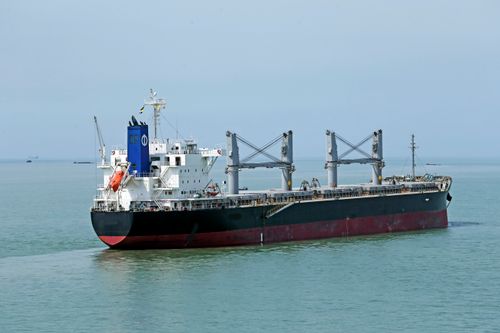

There’s an old piece of wisdom that grandmothers everywhere seem to share: keep your most precious things where you can see them. This week, the Dutch central bank acted on exactly that instinct — on a scale of 86 tonnes.
De Nederlandsche Bank, the Netherlands’ central bank, announced this week that it is shifting roughly 86 tonnes of gold bars out of New York and Canada and moving them closer to home. Let that sink in for a moment. Eighty-six tonnes. That’s not a shipment of documents or a wire transfer you can reverse with a phone call. That’s tons of heavy, physical, gleaming metal being loaded, insured, flown or shipped, and stored somewhere the Dutch can reach on their own soil. You don’t move that much gold on a whim.
A quiet vote of no confidence
The Dutch aren’t doing this because gold went up in price — though it has, with gold trading around $4,390 an ounce. They’re doing it because countries are rethinking where they stash their gold as relations with the United States fray. That’s the framing from the World Gold Council data behind the announcement, and it’s worth sitting with.
For decades, the arrangement was simple and nearly invisible: central banks around the world parked their gold reserves in a handful of trusted vaults — New York, London, Ottawa — because the postwar order said your gold was safest with your friends, and America was everyone’s friend. Storing gold in New York wasn’t just convenient. It was a statement of trust: we believe the rules will hold, we believe our assets are safe here, we believe this partnership endures.
Moving the gold out is also a statement. Not a loud one — central bankers don’t shout. But it is unmistakable. When a country decides that its national reserves belong closer to home, it is saying something about how durable it believes those old certainties are. It’s a financial version of taking your savings out from under someone else’s mattress.
What “repatriating gold” actually means
Let’s make this human, because the numbers are so large they can feel unreal. Eighty-six tonnes of gold is roughly the weight of a dozen African elephants, or about 15 full-grown elephants — however you picture it, it’s an absurd amount of mass to move. And it isn’t cheap or easy to move. Every bar has to be assayed, every shipment insured, every vault audited. Central banks don’t undertake this kind of operation for symbolism alone. They do it because the people responsible for a nation’s financial bedrock have decided that physical proximity matters more than convenience.
And the Dutch are not alone in this instinct. The announcement fits a broader pattern of countries quietly rethinking where they keep their reserves as geopolitical relations grow tenser. The World Gold Council has been tracking this drift: central banks have been steady buyers of gold in recent years, and increasingly, they want the metal in their own vaults. Gold in a vault in your own capital is gold no one else can freeze, delay, or complicate. It’s the ultimate financial self-reliance — the one asset that doesn’t depend on anyone else’s promise.
Why gold, why now
Gold has always been the asset people reach for when trust in the system wobbles. It doesn’t pay interest. It doesn’t grow. It just sits there, heavy and permanent, and that’s precisely the point. In a week when the world’s major central banks are all raising interest rates at once — the Fed, the ECB, and the Bank of Japan moving in the same window for the first time on record, with 10-year government bond yields above 5% — the Dutch announcement is a reminder that the same forces driving rates higher are also driving a quieter, older kind of caution.
Think about it from the perspective of a central banker. Your job is to protect your country’s financial foundation. The energy shock from the Middle East war is pushing up prices everywhere. Governments are borrowing at rates not seen in nearly two decades. Currencies are moving in sharp, politics-driven swings — the yen weakened even after Japan’s rate hike to a 31-year high. In that environment, having a meaningful share of your reserves as physical gold, in your own vaults, is about as conservative a posture as exists in finance. It’s the institutional equivalent of keeping an emergency fund in a safe you own, rather than in someone else’s bank.
Even the stock market’s reaction tells a story: Hong Kong-listed gold miners like Laopu Gold and Zijin Mining slipped this week as rate-hike headlines dominated. The paper value of gold companies bounces around with every macro headline, but the physical metal itself — the bars being loaded onto planes for Amsterdam — doesn’t care about the daily tape. That’s the whole appeal.
The trust question underneath
Here’s the part I keep coming back to, and I’ll be honest about where the reporting ends and my own thinking begins: my take is that the Dutch gold move is less about gold and more about the direction of trust in the global economy. The postwar financial system ran on a kind of gentleman’s agreement — your reserves are safe with us, our reserves are safe with you, and nobody moves the furniture. Every repatriation announcement is a small tear in that agreement. No single tear ends the system. But tears accumulate.
For an ordinary saver, there’s a practical echo here. You probably don’t have 86 tonnes of gold, and you don’t need to. But the Dutch central bank’s instinct is the same instinct behind every emergency fund, every diversified portfolio, every decision not to keep all your eggs in one account at one institution. It’s the recognition that trust is a wonderful thing to have — and a dangerous thing to depend on entirely.
It’s not enough to just assume the old arrangements will hold — we must listen to what the world’s most careful institutions are actually doing, learn from their caution, and contribute to our own financial resilience while we still have the calm to plan. The Dutch didn’t wait for a crisis to move their gold. They moved it now, methodically, on an ordinary week. That’s the part worth copying: not the gold, but the foresight.
Trust, it turns out, is like copper wiring or diesel fuel — invisible until the moment you need it. The Netherlands just decided it prefers its reserves where it can see them. The rest of us should pay attention to what that says about the world we’re saving in.