The company
Generac makes generators. For most of its life, that meant the beige box humming beside a suburban house during a storm outage, the kind of product you buy once, hope never to use, and forget about. This week, that company became one of the hottest stocks on Wall Street, because the artificial intelligence boom has a power problem, and Generac sells the answer.
On Thursday, September 17, Generac disclosed a long-term supply agreement with Amazon: about $2.4 billion of generator deliveries in 2027 and 2028 for Amazon’s data centers, with payments that could eventually reach $8 billion. Generac shares spiked 18.34% on Thursday to close at $207.23, after surging roughly 33% in premarket trading. Seeking Alpha
The deal and its numbers
The terms deserve a close look, because the headline number and the real number are different things.
The committed part: roughly $2.4 billion of generators to be delivered over two years, 2027 and 2028. The aspirational part: total payments that could eventually reach $8 billion if the relationship expands. And the part that shows Amazon’s seriousness: an Amazon subsidiary received a warrant to buy up to 1.69 million Generac shares at $200.9266 each, exercisable through September 16, 2033. Of that, 307,954 shares vested immediately. The full warrant only vests if Amazon actually buys $8 billion worth of generators.
That structure is doing real work. Warrants that vest on milestones align the customer’s incentive with the supplier’s: Amazon gets equity upside only if it keeps buying. It is the same kind of arrangement big cloud customers have used to lock in supply before, and it tells you Amazon expects this relationship to be large and long.
For scale, Generac’s data-center backlog was already $1.6 billion before the Amazon deal. On its July second-quarter call, the company said it had agreements with two leading hyperscalers. This week’s SEC filing revealed that the second one was Amazon. Daily Upside
Why Amazon needs it: the power bottleneck
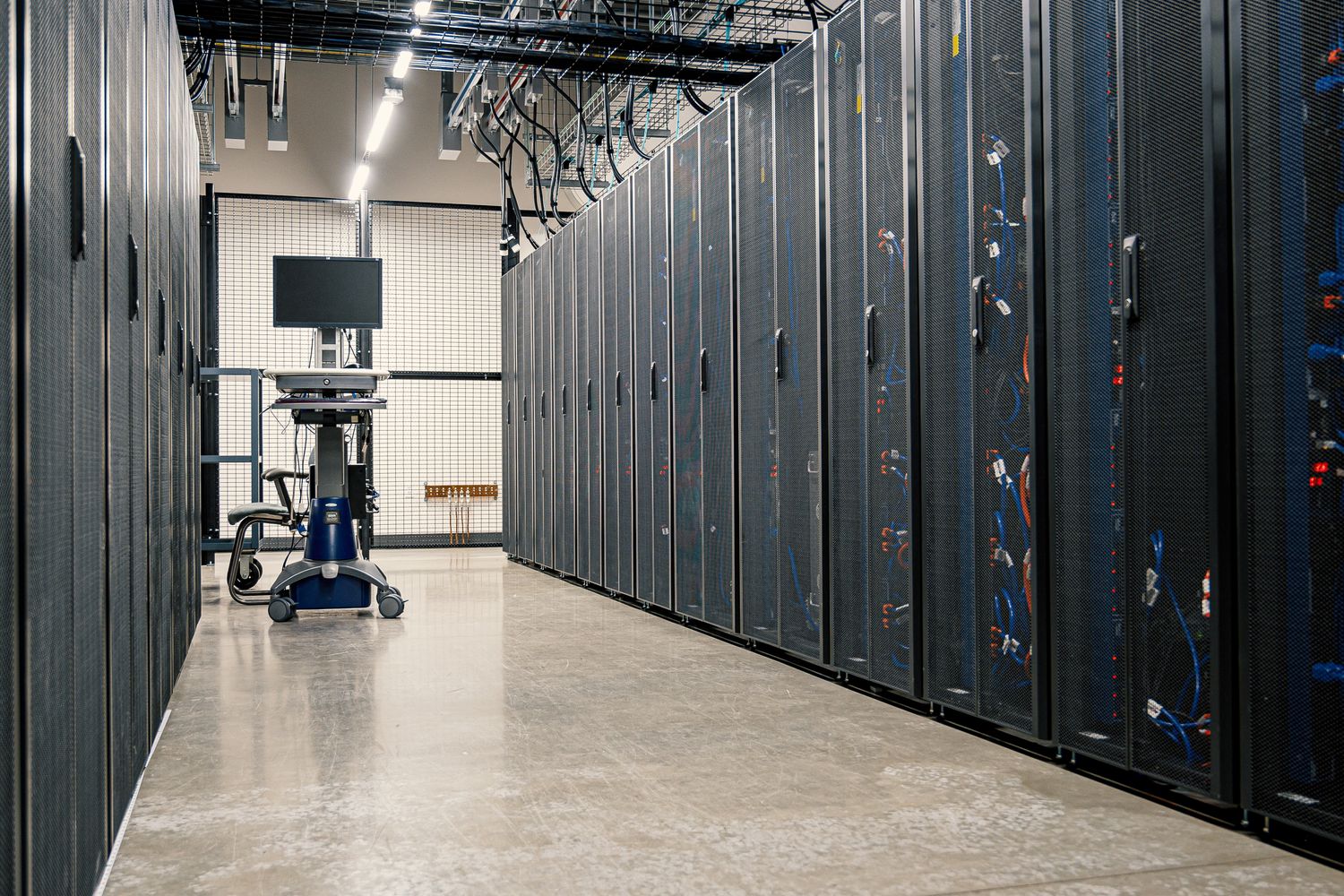
Think about what a data center is. A warehouse full of computers that never sleep, each one drawing power and throwing off heat. The AI models everyone is racing to build need far more of these warehouses than exist today, and every one of them needs electricity the moment it switches on.
Here is the problem. The U.S. power grid was not built for this. Moody’s estimates that surging data-center demand will require about $110 billion of new power plants through 2030. And the average wait to connect a big new load to the grid is five years, according to Lawrence Berkeley National Laboratory.
Five years. The AI labs want their data centers now.
Generators fill the gap. Until the grid catches up, a data center can run on backup and supplemental generation, big industrial units, not the suburban beige box. That is why Amazon, which is pouring money into data centers to feed its cloud and AI business, is signing a multi-billion-dollar generator contract. It cannot wait five years for a grid connection.
This is the picks-and-shovels side of the AI boom. The headlines go to the chipmakers and the model builders, but every one of those companies is, at the bottom of it all, a buyer of electricity. Generac does not need AI to work out. It just needs the buildout to continue.
What has to go right
Thursday’s 18% pop is the market pricing in a very good outcome. It is worth asking what could go wrong.
First, execution. Canaccord analyst George Gianarikas said Generac must triple its capacity by next year, per Barron’s reporting. Tripling capacity in twelve months is the kind of target that separates a great quarter from a great story. Factories, workers, supply chains, and quality control all have to scale at once.
Second, concentration. A $2.4 billion commitment from one customer is wonderful until it is not. If Amazon slows its data-center buildout, or shifts to a different power strategy, Generac’s order book has a hole in it. The warrant structure mitigates this somewhat, Amazon is financially committed to the upside, but a customer this large is still a single point of failure.
Third, timing. The deliveries are slated for 2027 and 2028. A lot can change in two years: the AI investment cycle, electricity prices, the grid-interconnection queue, even Amazon’s own strategy. The $8 billion figure is a ceiling, not a promise.
Lessons for readers
There are two lessons here, and they point in opposite directions.
The first is the picks-and-shovels lesson. When a gold rush starts, the surest money is often in the shovels. The AI boom’s shovels are chips, yes, but also power plants, cooling systems, electrical equipment, and generators. Generac’s deal is a reminder to look one step behind the headline technology, at the unglamorous inputs every competitor needs. Those businesses tend to be cheaper, less crowded, and more durable than the story stocks.
The second is the concentration lesson. An 18% single-day jump feels like a windfall, and for Thursday’s buyers it was. But stocks that move on one customer contract can move just as fast in the other direction on one canceled order. If you are tempted to chase a move like this, ask yourself: do I understand this business well enough to hold it if the Amazon deal shrinks? If the answer is no, the move was never really yours to make.
Picture a small business owner in a town where a data center is going up, watching the construction crews and wondering what it all means for the local economy. The Generac deal is her answer in miniature. The AI economy is not just software. It is concrete, copper, diesel, and generators. It is power, delivered on time. And this week, the market decided that the company best positioned to deliver it was worth 18% more than the day before.
Whether that turns out to be right depends on the unglamorous work ahead: building factories, hiring workers, and shipping generators on schedule. The AI boom runs on electricity. Somebody has to keep the lights on.