Picture a young office worker in Shenzhen on her lunch break, phone propped against her noodle bowl, watching the stock she bought that morning double — then triple — before she has finished eating. Around her, coworkers are doing the same, cheering each green tick like a home team scoring. This is not a scene from a casino. It is China’s IPO market in 2026, and the woman with the noodles is having the best lunch of her year.
Behind her good fortune stands the most unusual market-maker in global finance: China’s securities regulator. Beijing has given investment bankers three plain instructions: price new IPOs cheaply, keep “low-quality” companies out of the market entirely, and list only the “national champions” — the firms that represent where the country wants to go.
And the crowd? The crowd is cheering.
New listings in China have delivered a median first-day gain of 173% this year. Read that again — 173%. The chipmaker CXMT and the robotics darling Unitree each surged more than 400% on their debuts. More than 100 companies have listed so far in 2026, raising over $28 billion — roughly 50% more than all of 2025. It is, by any measure, a boom.
But here is where the story gets human, and a little tender. Unitree, that robot-maker everyone cheered on day one, has since lost nearly half its value from its first-day peak. The applause was real. The morning-after quiet was real, too.
Anyone who has run a bakery knows this feeling. The first batch out of the oven at dawn sells out in minutes — a line out the door, the best morning of the year. But a bakery is not judged by its 7 a.m. rush. It is judged by whether customers keep coming back at 3 p.m. on a rainy Tuesday in November. A 400% first-day pop is the dawn rush. What happens after is the business.
It’s not enough to just celebrate the debut. We must listen to what the regulator is really trying to do — and ask what it costs.
Think about the instruction to price IPOs “cheaply.” On the surface, it sounds generous: leave money on the table so ordinary investors get a win on day one. And indeed, retail investors in China have had a wonderful year of opening-day pops — the woman with her noodles is proof. But cheap pricing is also a choice about who the market is for. When regulators decide which companies are “champions” and which are “low-quality,” they are doing what no free market does: they are writing the guest list before the doors open. Every company that lists has been approved in advance.
There is something undeniably appealing about a market that protects its people from the worst excesses. How many families in America watched a hyped IPO in 2021 — priced to perfection, sold to the moon — only to watch it fall 80% and take their savings with it? The Chinese approach says: never again. The debut will be kind. The crowd will go home happy.
But a market that only ever lists approved companies eventually loses something precious: surprise. The 173% median first-day gain tells us the pricing is not just kind — it is artificial. When every listing pops, the pop stops being information. It becomes ceremony. And a ribbon-cutting is beautiful right up until it replaces the building — until the celebration matters more than what is being celebrated.
Think of it like a garden where only approved seeds may be planted. It will look tidy. Nothing ugly will ever sprout. But it will also never surprise you — and the most valuable things in economic life, the strange startups that become great employers, are almost always surprises.
And then there is the human side of the “national champions” idea. I understand the appeal, honestly. It has the warmth of a hometown parade. But I also think about the companies that did not get to march — the odd, unglamorous, unapproved firms that in a freer market might have become the next great employer in someone’s hometown. Champions are chosen. Communities are built. Those are not always the same thing.
What does this mean for the rest of us, watching from across the ocean? I think it means asking a better question than “is China’s market up or down?” The better question is the one every saver should ask before trusting any market with their money: who is this market for?
If the market is for the debut-day investor, China is delivering beautifully. $28 billion raised, 100 companies funded, a nation of savers given a reason to believe the market is their friend. That matters enormously. A market that ordinary people trust is a market that can fund real things — chip factories, robot labs, the industries of tomorrow. Trust is the scarcest commodity in finance, and Beijing is manufacturing it by the ton.
If the market is for the long-term investor — the pension fund, the young saver putting money away for twenty years — the picture is murkier. Unitree’s round trip from euphoria to a 50% haircut is a reminder that no regulator, however wise, can repeal gravity. Prices find their level. The only question is whether they find it on day one, in daylight, or in the quiet months after, when nobody is watching and the lunch-break crowd has moved on.
It’s not enough to just watch the numbers climb. We must listen, learn, and contribute — contribute our skepticism along with our hope. The Chinese experiment deserves our attention not because we should copy it, but because it forces us to ask what our own markets are for. Are our IPOs priced for the company, the banker, or the everyday investor? When was the last time an American debut left 173% on the table for the little guy? We might raise an eyebrow at the stage-management in Beijing, but we should also ask who is managing our own stage — and in whose interest.
Consider the incentives honestly. In the American system, the banker prices the IPO to please the big institutional clients who will buy the next deal too — the pop, when it happens, mostly rewards the already-connected. In the Chinese system, the regulator prices the IPO to please the crowd — the pop rewards the noodle-bowl saver. Both systems have a favored child. The honest question is not which system is pure — neither is — but which favored child you would rather be.
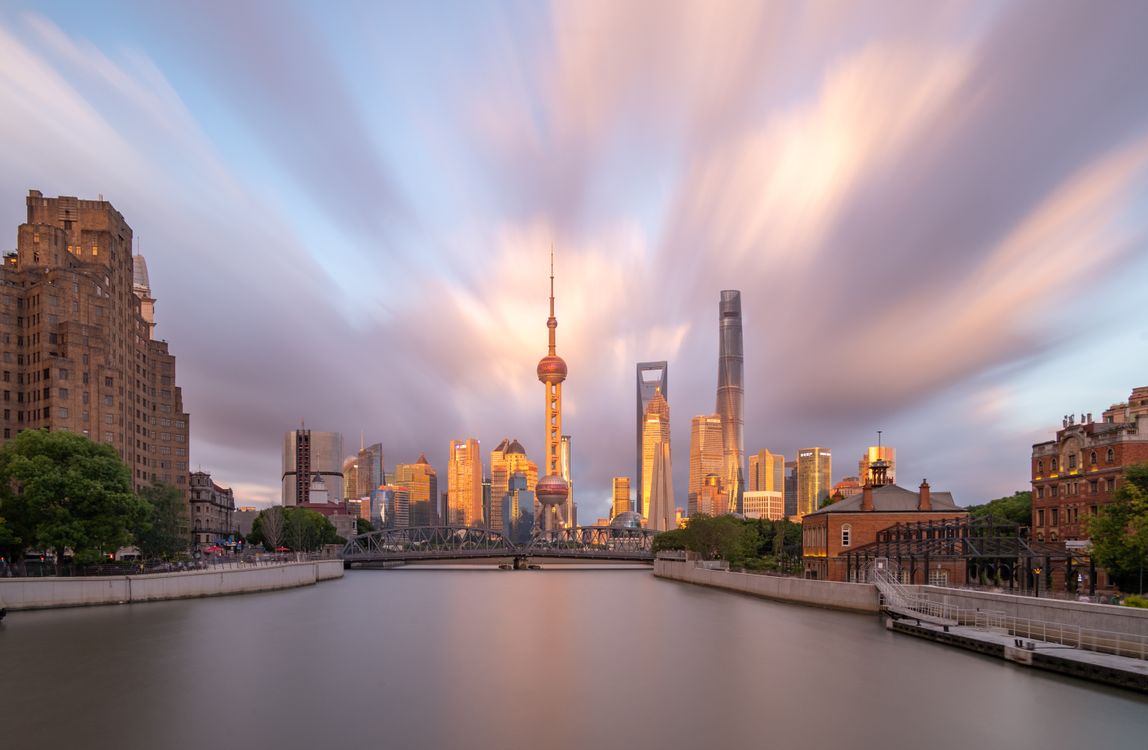
I will leave you with this image: a crowded trading hall in Shanghai, the opening bell, a hundred companies stepping forward this year, the crowd on its feet. It is a hopeful scene — ordinary people believing, perhaps for the first time, that the market can be their friend. I only hope that when the second act begins — and it always begins — the businesses underneath are strong enough to keep them believing.
Because in the end, a market is not judged by its opening day. It is judged by whether people still trust it years later, when the confetti is swept up and the noodle bowls are empty and what remains is the quiet work of building real companies.
Here’s to markets that earn their keep long after the celebration ends.