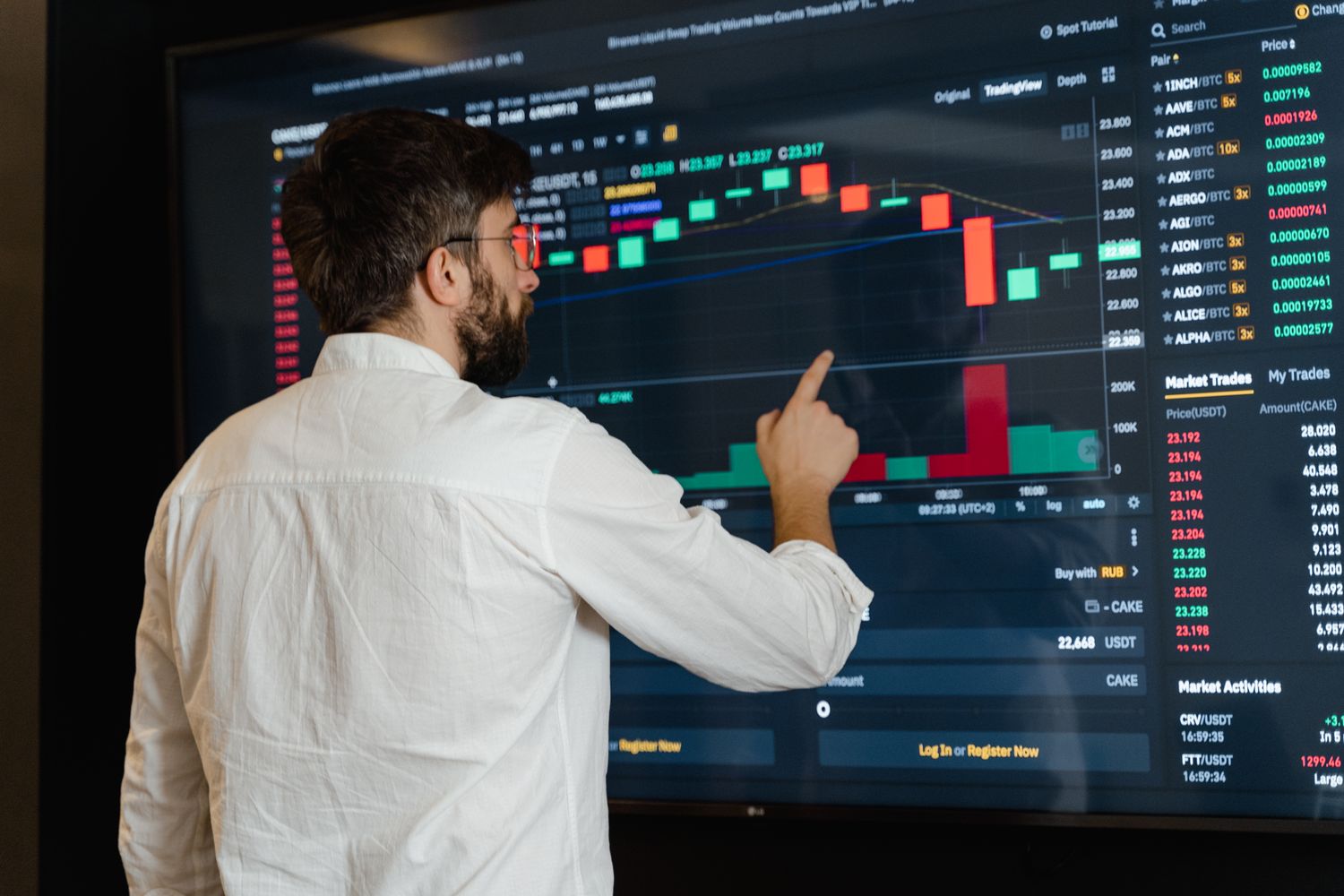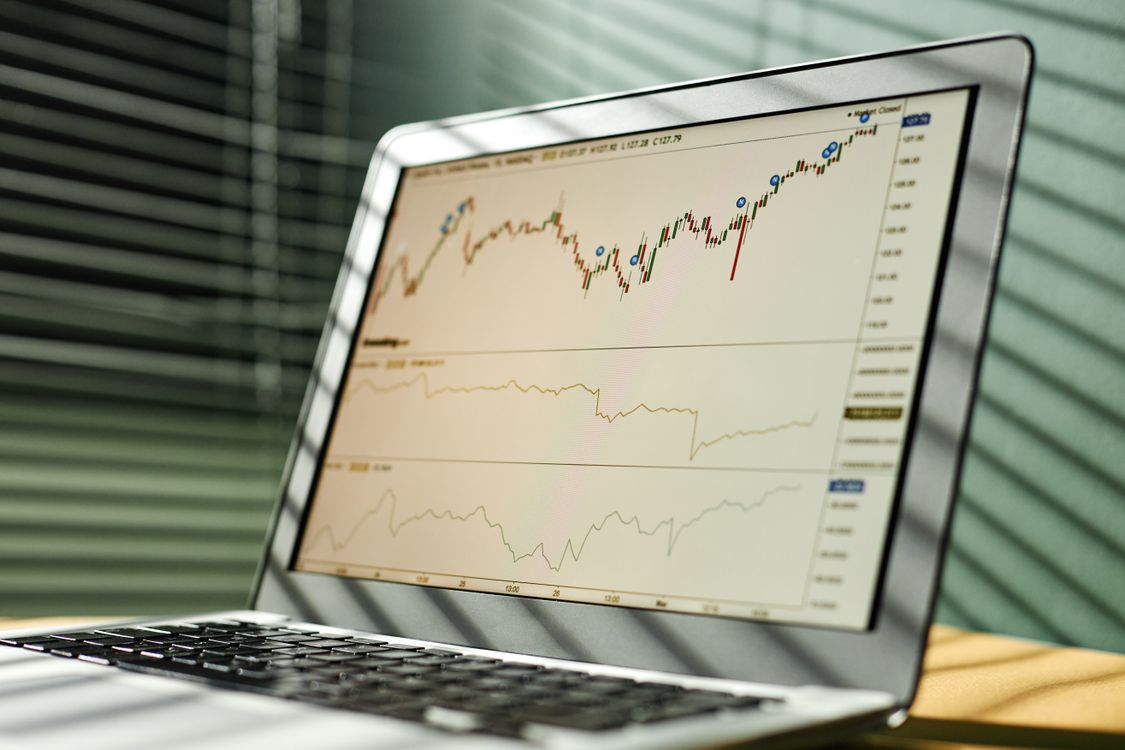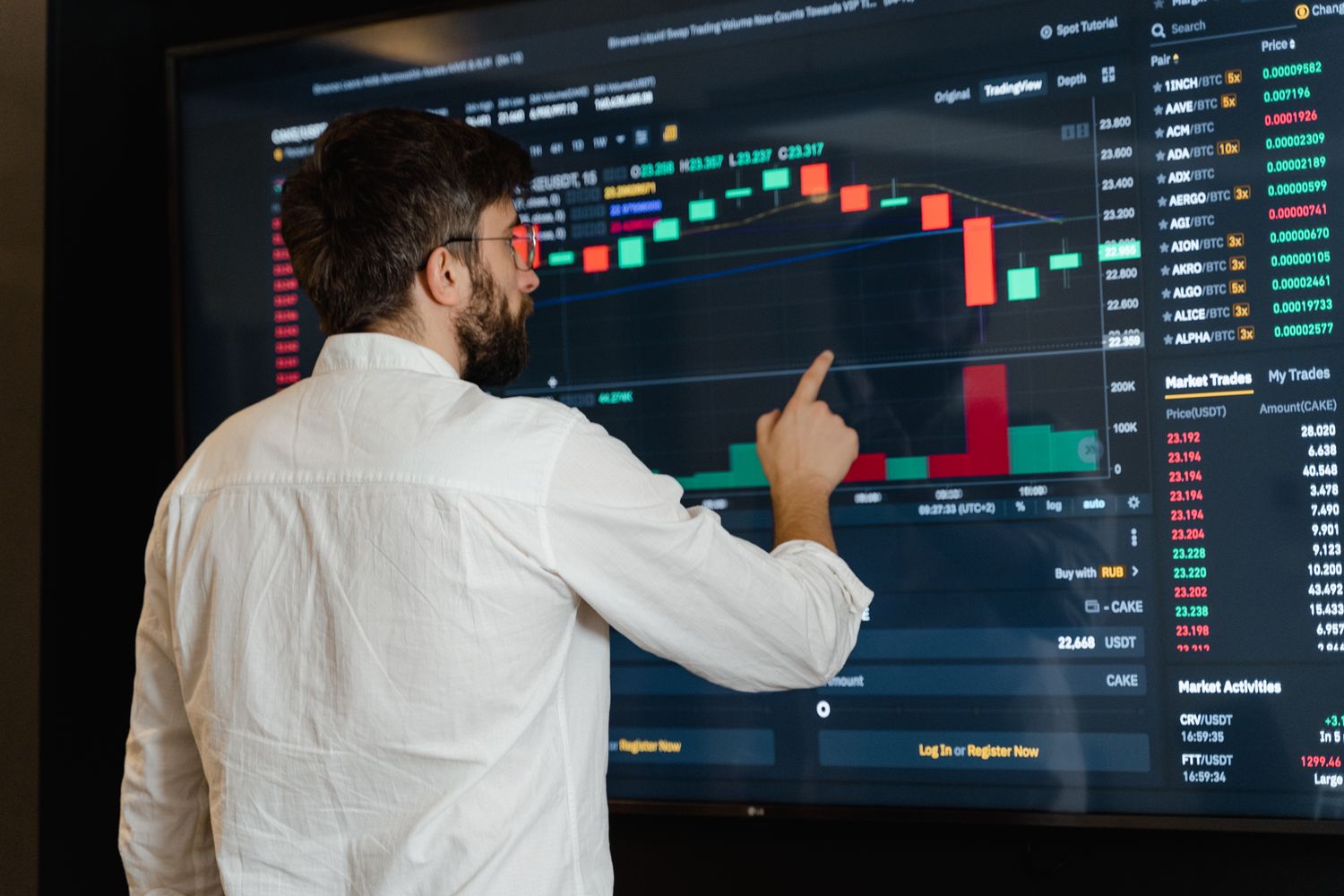

There is a specific kind of dread that comes from watching your 401(k) balance on a phone screen in a grocery store parking lot. You’re not a trader. You’re a nurse, a warehouse supervisor, a teacher with twenty years in — and the number on the screen represents a decade of automatic contributions, of money you never saw because you never touched it. Monday was the sixth down day in seven sessions for U.S. stocks, the Wall Street Journal reported. The S&P 500 is down nearly 1% so far in September — historically its weakest month, according to Seeking Alpha’s Wall Street Breakfast. And into this unease stepped a professional risk manager with a number that got everyone’s attention: eight to ten percent.
Dean Curnutt is the CEO and founder of Macro Risk Advisors, and in a Monday note reported by Bloomberg and quoted by Wall Street Breakfast on September 15, he said plainly: “We expect an 8-10% pullback in S&P with a potential second leg in December.” Not a crash call shouted from a rooftop — a measured warning from a man whose job is measuring exactly this kind of thing. His reasoning is worth hearing in full. Rate hikes, he argues, will “compress margins in companies that cannot pass costs through” — the ordinary businesses without pricing power, the ones that absorb higher borrowing and labor costs instead of passing them to customers. And, he says, “a defensive posture is the correct approach,” because the market could take another leg lower in December as multiple hikes land “into a K-shaped, low-churn economy” — an economy where the well-off keep spending while everyone else stalls, and where little is changing hands to cushion the fall.
Curnutt’s warning comes with a ghost attached: 2018. That year the S&P 500 peaked in September, then plunged 10 percent across October and November. “The Santa Claus rally did not come,” Wall Street Breakfast recalled, and the market eventually fell roughly 20 percent from its peak. The parallel is deliberate and chilling. A rate-hiking Fed, a market priced for perfection, a September top — the ingredients rhyme even if the recipe isn’t identical. Eight years on, the question isn’t whether history repeats; it’s whether investors have learned anything from the last time the punch bowl was taken away in autumn.
There is a structural reason this warning lands harder now than it would have a decade ago, and it has to do with what the S&P 500 has become. The index is heavily concentrated in mega-cap technology and AI names — Nvidia, Apple, Microsoft, Amazon, Alphabet, Broadcom, Meta, Tesla — the handful of giants that have carried the market’s gains. And September has already shown how concentrated risk cuts both ways. Month to date, per Wall Street Breakfast: Nvidia down more than 4%, Amazon down 2.4%, Broadcom down 6.9%, Tesla down 2.4% — with Apple up 5% and Alphabet up 3% as the exceptions. When the pillars wobble, the index wobbles; there is less underneath than the headline number suggests. A 10 percent pullback in an index this top-heavy is not a broad, shared decline — it’s a handful of giants exhaling at once, and everyone else along for the ride.
JPMorgan’s analysts added a decision-day wrinkle to the picture. Their consensus, per Reuters, is a 25-basis-point hike with “little forward guidance” — but if the Fed surprises with no hike at all, they see the S&P 500 falling 1.25%–1.75%. Read that carefully: even the absence of the expected hike is bearish in their framing, because it would signal the Fed sees something worse than inflation. The market, in other words, has priced in the medicine and fears the diagnosis. That’s a fragile setup, and fragile setups are what corrections are made of.
But it’s not enough to just read a warning like Curnutt’s and sit frozen at the parking-lot screen. It’s not enough to treat a pullback forecast as a prophecy to fear or a dip to blindly buy. We must listen to what the warning is actually about — margins, concentration, the mechanics of higher rates working through real companies — learn how corrections fit into the long arc of a savings life, and contribute to the steadiness that keeps a market wobble from becoming a personal crisis: by knowing our time horizon, our allocation, and our own nerves before the red days arrive.
My take: Curnutt’s call deserves respect precisely because it’s specific — 8 to 10 percent, with a second leg in December — and because the mechanism he names is real. Margin compression in companies that can’t pass costs through is what rate hikes do; it’s not a theory, it’s arithmetic. But specificity cuts both ways. An 8–10% pullback is also, historically, utterly ordinary: the S&P 500 has endured dozens of them on the way to its long-run gains, and investors who stayed invested through 2018’s 20% drawdown were made whole and then some. The danger was never the pullback itself. It was the panic selling at the bottom — the nurse in the parking lot moving to cash at the worst possible moment because nobody had told her that corrections are the fee, not the fine.
For regular people, the practical response to a warning like this is not prediction — it’s preparation, and it’s the same preparation that works every September. First, know your horizon: if you need the money within a few years, it shouldn’t be fully exposed to stocks anyway, warning or no warning. Second, look at your concentration honestly — if your 401(k) is riding the same seven mega-caps as everyone else’s, a target-date fund or broader index may be the steadier vehicle. Third, keep contributing: automatic investing through a pullback is how ordinary savers buy the dip without ever timing it — every 2018 buyer who kept their contributions on autopilot bought October and November at a discount. Fourth, keep an emergency fund in cash so a market drop never forces you to sell investments to pay a bill; that’s how paper losses become real ones. And finally, decide your rules now, in calm: what would make you rebalance, what would make you add, and — most importantly — what would never make you sell in a panic.
Dean Curnutt may be right. An 8–10% pullback with a second leg in December would hurt, and the 2018 parallel is close enough to take seriously. But the people who weather corrections best are rarely the ones who predicted them. They’re the ones who were prepared for them — diversified, funded, steady, and still contributing when the screen turns red. The market will do what markets do in September. The question, as always, is what we do. And the best answer hasn’t changed in a hundred years: stay in the plan, keep the discipline, and look after each other through the wobble — together.