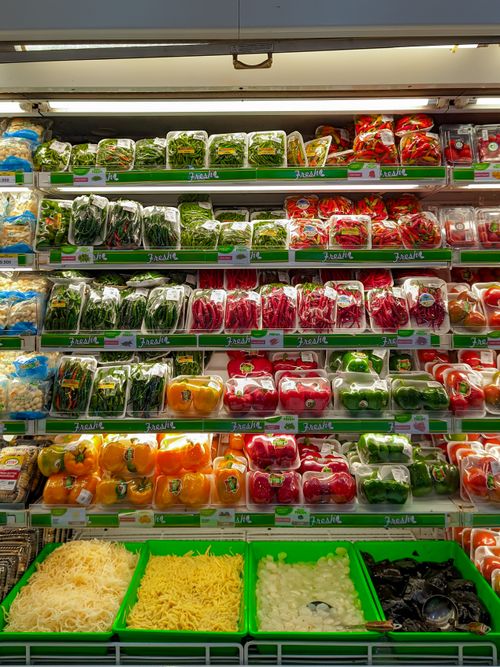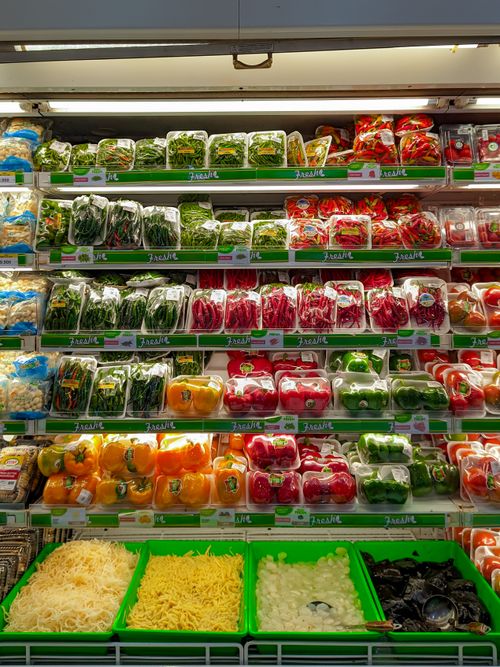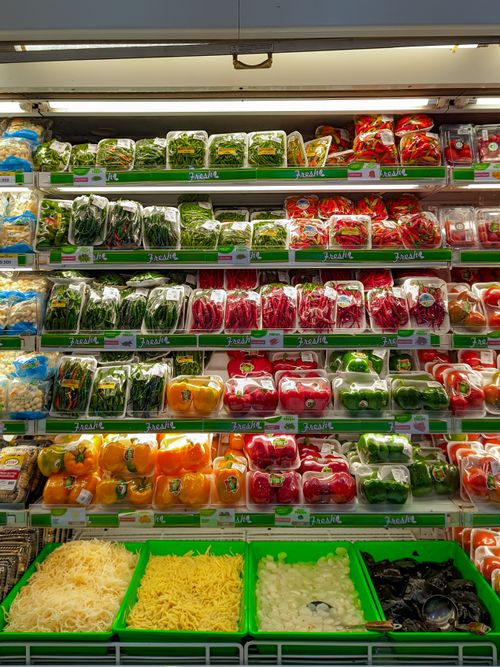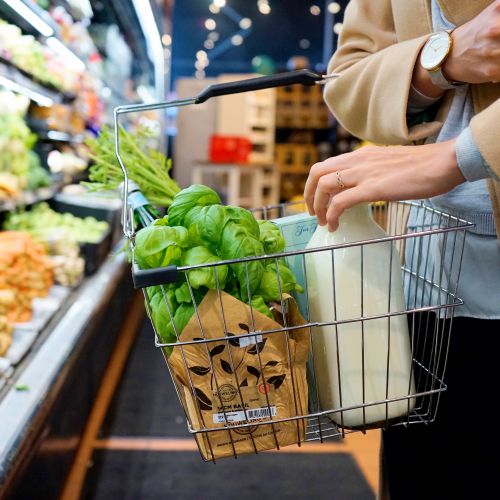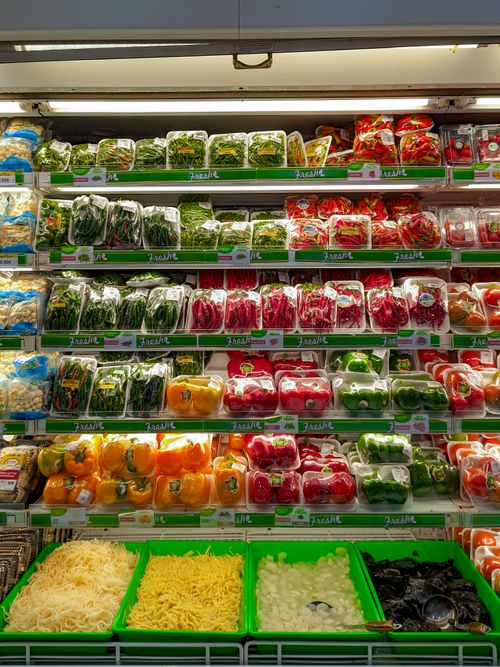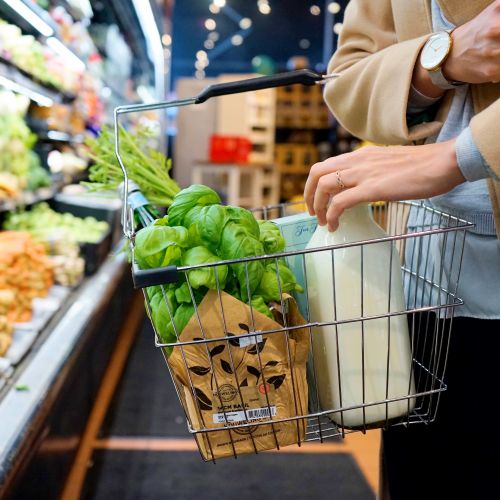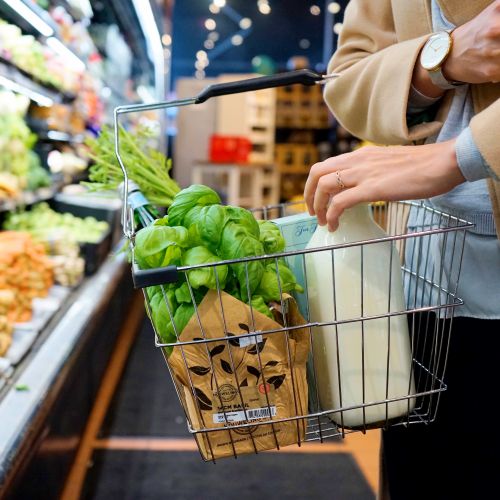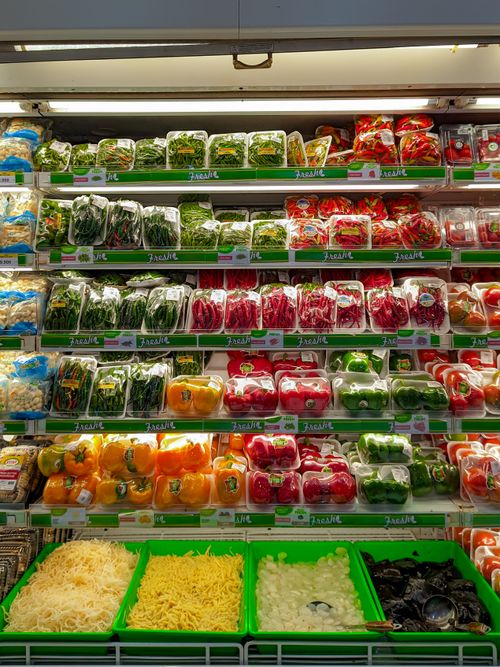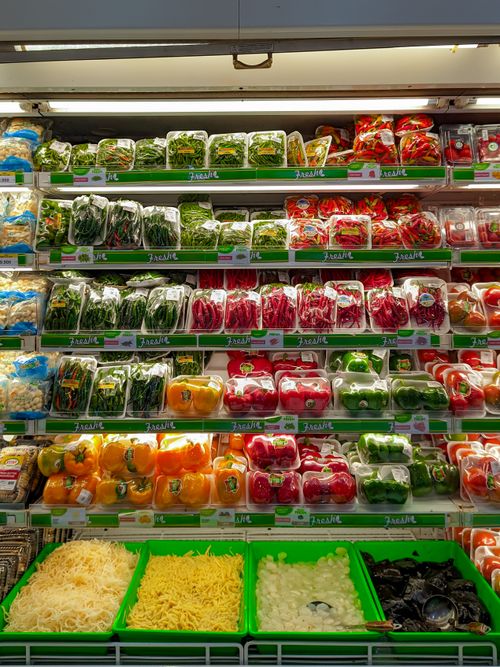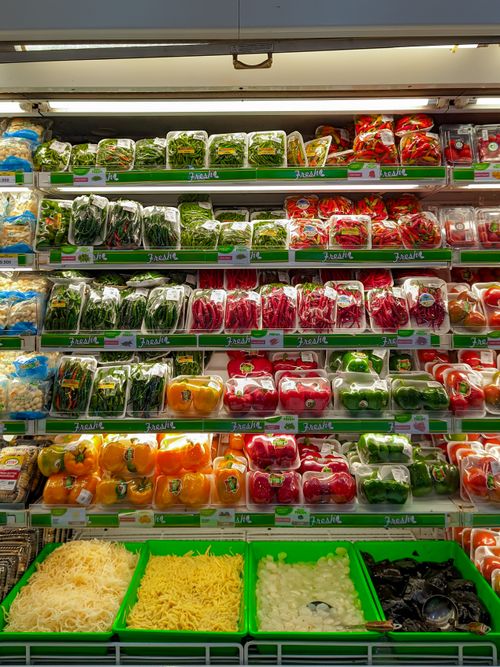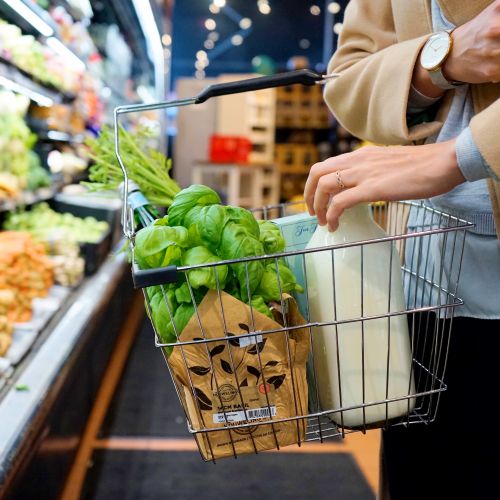
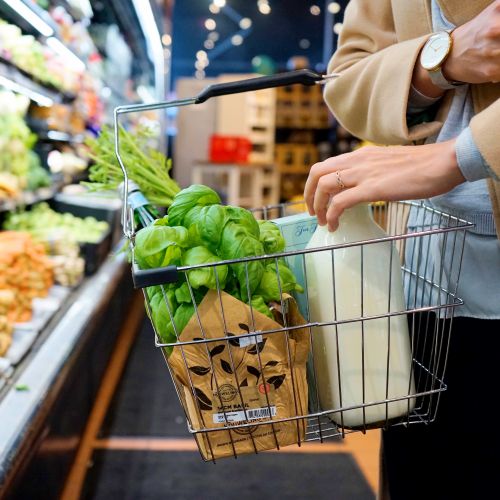
Every Sunday evening, in millions of American kitchens, the same quiet ritual plays out. A parent stands in the produce aisle, turning over a head of lettuce, checking the dates, doing the small mental math of the week ahead — school lunches, work lunches, the salad that will (hopefully) get eaten before Friday. It’s an act of trust so ordinary we never think about it. We trust that what’s in the bag is safe for the people we love most.
This summer, that trust broke at one of America’s largest grocers — and this week we learned exactly what it cost.
Kroger disclosed that a summer cyclosporiasis outbreak cost the company more than $100 million in lost sales, as shoppers steered clear of its produce sections. CEO Greg Foran told investors the damage went beyond any single product: identical-store sales excluding fuel were reduced by roughly 0.35 percentage points in fiscal Q2, and the hit extended past iceberg lettuce as customers avoided produce generally. When people lose confidence in the salad case, they don’t just skip the lettuce — they skip the whole aisle.
The scale of what happened
Let’s put the numbers in plain terms, because they deserve plain terms. The U.S. Food and Drug Administration counted 12,883 reported illnesses across 21 states tied to the outbreak. Read that again: nearly thirteen thousand people, in twenty-one states, sick enough to be reported. The outbreak was declared over on September 11. But “over” is a medical term, not a business one — Kroger says the sales impact is continuing into the current quarter, Q3, as shoppers only gradually return to old habits.
The financial consequences show up where investors feel them most: guidance. Kroger cut its full-year identical-store sales forecast excluding fuel to a range of 0.2 percent to 0.8 percent, down from the previous 1 percent to 2 percent. That’s a dramatic haircut. Identical-store sales — what retailers call “comps” — are the purest read on a grocer’s health, because they strip out the noise of store openings and closings and show whether the stores you already have are actually growing. Cutting that forecast by more than half tells you management doesn’t expect a quick bounce-back.
It’s not enough to just track the lost sales — we must listen to what customers are actually saying with their feet, learn what really broke, and contribute to a business culture where safety is treated as the product, not the packaging.
Why produce scares are different
A recall of canned soup is a logistics problem. A produce scare is a psychology problem, and psychology heals slower than supply chains. Here’s why: produce is the one department where the customer does the final quality inspection with their own hands and, eventually, their own body. There is no cooking step to hide behind, no sealed can, no brand-name box offering reassurance. A tomato is a tomato, and it goes straight from the shelf to the table. When an outbreak attaches itself to that department, it attaches itself to the most intimate part of the grocery trip.
That explains the detail in Foran’s comments that the damage “went beyond iceberg lettuce.” Shoppers weren’t doing a careful risk assessment, distinguishing one leafy green from another. They were doing what humans do when trust breaks: they generalized. The whole produce section felt suspect. Some of those shoppers went to competitors; some just bought less fresh food, period. Either way, Kroger’s registers felt it to the tune of nine figures.
For context on how thin grocery economics are: supermarkets typically operate on net margins of one to three percent. A $100 million-plus sales hole doesn’t just dent a quarter — it erases the profit contribution of an enormous amount of selling effort. And unlike a one-time charge you can explain away, lost customer trips compound. A family that breaks its Kroger habit for six weeks may discover it likes the competitor’s store layout, or its prices, or its parking lot. Habits are the real inventory in grocery, and they restock slowly.
What this means for the everyday shopper — and investor
If you hold Kroger shares in a retirement account, this week was a reminder that operational risk doesn’t always announce itself in a 10-K risk section with flashing lights. Sometimes it arrives as a parasite in the produce supply chain. The company’s swift disclosure and the guidance cut are actually the responsible moves here: better to reset expectations honestly than to dribble out disappointment quarter after quarter. Investors should prefer the management team that rips off the bandage.
If you’re a shopper, the takeaway is more reassuring than it might feel. The FDA’s surveillance system worked — the outbreak was identified, tracked across 21 states, traced, and declared over. Twelve thousand illnesses is serious, and nobody should minimize it, but the detection and response infrastructure did what it was built to do. The food supply remains one of the most monitored systems in American commerce. Trust, once broken, deserves evidence before it’s restored — and the evidence here is that the system caught the problem and closed it out.
My take: the most underappreciated line in this whole story is Foran’s acknowledgment that the impact is continuing into Q3. That honesty costs something in the short term — analysts don’t love hearing that a problem has a tail. But it buys something more valuable: credibility for the next forecast. Kroger is telling the market, in effect, “we’d rather under-promise now than revise again later.” In an industry built on weekly shopping trips and razor-thin margins, that kind of candor is a competitive asset. Watch the next two quarters of identical-store sales closely; the speed of the recovery will tell you more about the durability of the Kroger brand than any advertising campaign could.
There’s a broader lesson here for anyone running a business, whether it’s a grocery empire or a corner store. Your customers lend you their trust the way a bank lends money — conditionally, and with the expectation of repayment in the form of consistent quality. A food safety failure is a default on that loan. Kroger will pay it back, with interest, through months of rebuilt confidence, one uneventful produce aisle at a time.
The good news, and there is real good news, is that trust can be rebuilt. It just can’t be rushed. It returns the way it was built in the first place: one safe bag of groceries, one ordinary Sunday evening, one family dinner at a time. That’s the slowest kind of recovery — and the most durable kind, too.