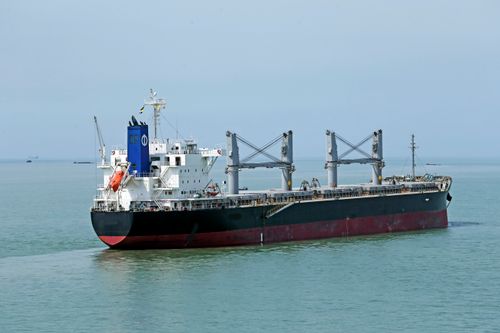
Some lessons you learn at the kitchen table, some on the evening news, and some at the gas pump. This September, the number hanging over every American household budget has been oil — and it’s not a gentle story. It started back in February, when the Strait of Hormuz effectively went quiet.
I grew up hearing the older folks in my family talk about the oil shocks of the seventies — the gas lines, the rationing, the way a faraway crisis could empty a neighborhood’s wallet. I thought those were stories from another century. This year taught me that some crises never really end; they just return wearing new clothes. The US–Iran war has kept Hormuz — the narrow waterway through which a huge share of the world’s oil travels — effectively closed to much oil traffic since February. And now, in September, the consequences are arriving at the pump.
Thursday’s spike, Friday’s stumble
By Thursday, the oil market had worked itself into a fever. Brent crude — the global benchmark — pushed past $107 a barrel at its highs, up roughly 15% for the month of September alone. West Texas Intermediate, the American benchmark, touched $102. Those are the kinds of numbers that make traders reach for the antacids and make the rest of us brace for what comes next at the pump.
But markets are always watching for a change in the wind. On Friday, oil fell more than 2% on a scoop from the Financial Times: Gulf foreign ministers could meet their Iranian counterparts to discuss temporary shipping arrangements through Hormuz. The mere possibility of tankers moving again — even partially, even temporarily — was enough to let some air out of the rally. Hope, it turns out, is a market-moving commodity too.
Then came the counterweight. On Thursday, the Houthis — the Iran-aligned movement in Yemen — seized the port city of Mokha, threatening the Bab el-Mandeb strait. That matters enormously, because Bab el-Mandeb is the alternate route Saudi Arabia has been using to get its oil out since Hormuz closed. It’s as if the world found a detour when the main road washed out — and now someone’s threatening the detour too. WTI dropped roughly 3% on Friday toward $99, caught between the hope of Hormuz reopening and the fear of another chokepoint closing.
Why a strait on the other side of the world is your problem
It’s not enough to just read about shipping lanes and shrug because they’re far away. Let me make this personal: everything is connected, and the connections always reach your street eventually.
The price of crude oil is the first domino. It becomes the price of gasoline, diesel, jet fuel, heating oil. It becomes the shipping cost on the truck that delivers your groceries, the airfare to visit your grandmother, the heating bill when winter comes. When Brent is sitting above $107, that cost is flowing through the entire economy like a current you feel whether or not you’re paying attention to it.
I think about the truck drivers — the men and women who keep this country fed and stocked. I spoke last month with a long-haul driver named James at a rest stop, a man with twenty years on the road and a laugh that could fill a truck stop. He told me fuel is his biggest cost and his biggest worry, and that when diesel spikes, his whole business plan has to be rewritten at the pump. James doesn’t follow the futures market. But the futures market follows him, in a sense — his diesel, his freight, his family budget, all of it downstream of a strait most Americans couldn’t find on a map.
The human geography of energy
There’s a wider story here that deserves telling with care. The Strait of Hormuz and the Bab el-Mandeb aren’t just lines on an energy trader’s screen; they’re places where real people live, work, and now suffer. The war between the US and Iran, now in its eighth month, has a human cost that no barrel price can capture — families displaced, sailors’ lives at risk, coastal communities living under the shadow of conflict. When we talk about “shipping arrangements” and “chokepoints,” we should never let the jargon launder away the humanity.
It’s not enough to just track the price and hope it goes down. We have to reckon with why it’s up — with the fact that energy markets are hostage to geopolitics, and geopolitics right now is hostage to violence. Every dollar added to a barrel by war is a tax levied on the poorest first. The wealthy barely notice a gas price spike. The single mother commuting forty minutes to a night shift notices it in her bones.
This is where the community part comes in, the part I always come back to. In my neighborhood, when times get tight, people start sharing rides, coordinating grocery runs, looking out for each other in small practical ways. That’s not just kindness — it’s the oldest form of economic resilience there is. The macro story is about straits and summits and seizures of port cities. The micro story, the one that matters, is about whether we tighten our belts alone or tighten them together.
What to watch next
The market now hangs on two questions, and they’re both human questions, not technical ones. First: will those Gulf and Iranian foreign ministers actually sit down together, and can diplomacy pry Hormuz open even a crack? Second: does the Houthi seizure of Mokha become a lasting threat to Bab el-Mandeb, or is it a pressure tactic that fades?
Nobody knows. The only certainty is volatility — the market will keep swinging between hope and fear, and each swing will echo through prices we all pay. September has already delivered a 15% surge in Brent; whatever comes next will be felt in wallets long before it’s understood in headlines.
And there’s a third question worth asking, the one that stretches beyond this month: how long can the world economy keep absorbing shocks routed through a single narrow strait? Every disruption like this one exposes the same fragility — a global system balanced on a handful of maritime chokepoints, where one seizure of one port city can move the price of bread on the other side of the planet. The honest answer is that resilience isn’t built in a crisis; it’s built in the quiet years, through diversified supply, strategic reserves, and the unglamorous work of planning for the day the strait goes quiet. That work is overdue.
So here’s my invitation, plain and simple: don’t just watch the price of oil like a spectator. Understand that it’s a thread connecting a fishing village near Hormuz to a truck stop in Texas to your own kitchen table. We’re all downstream of the same strait, like it or not. The least we can do is look out for each other — and hold steady together.