About a fifth of the world’s oil flows through a waterway most Americans could not find on a map. The Strait of Hormuz — a narrow passage between Iran and Oman, barely twenty miles wide at its tightest — is the jugular vein of the global energy system. And right now, that vein is under attack.
Brent crude, the global benchmark, surged 6.3 percent in a single day to top $107 a barrel, briefly touching $108 on Monday. West Texas Intermediate, the American benchmark, stands near $100 — up roughly 20 percent in just two weeks, after spiking 8 percent to $103 in one session. These are not numbers that stay on trading screens. They travel, quickly and ruthlessly, to every gas station and grocery store in the country. Remember Friday’s inflation report: gasoline up 27.4 percent from a year ago, driving more than a third of August’s entire price increase. This is where that number comes from.
What is happening in the Gulf represents, in the words of Dow Jones energy correspondent Andy Critchlow on the WSJ’s What’s News podcast, “a complete change in the security environment.” Energy infrastructure, he said, “is very vulnerable” — and how nations defend that infrastructure is “a key trend that defines where we go as far as energy supplies are concerned over the next decade,” feeding directly into the transition toward electric vehicles. When the people who cover energy for a living start talking in decades, pay attention.
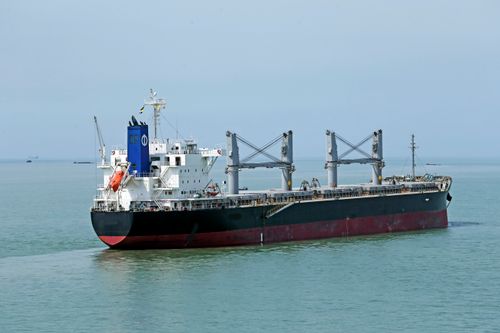
The human scale of the disruption is staggering. Roughly 2,000 vessels and 20,000 seafarers are effectively trapped in the Persian Gulf, according to the International Maritime Organization’s Arsenio Dominguez. Twenty thousand people — cooks, engineers, deckhands from the Philippines, India, Eastern Europe, ordinary workers — sitting on ships in one of the world’s most dangerous waterways, waiting. Naval escorts are being discussed, but Dominguez is blunt that they are “not a long-term sustainable solution.” Even if the strait reopens soon, he warns, it will take weeks or months for shipping to normalize.
There are diplomatic stirrings. Gulf and Iranian foreign ministers have been meeting to discuss a temporary shipping arrangement through Hormuz, according to the FT’s briefing. But the escalation ladder keeps moving the other way: Houthi forces have captured a Red Sea port, sit roughly twenty miles from the U.S. base in Djibouti, and the United Nations reports 82,000 people displaced in Yemen this month alone. Natixis analyst Joel Hancock Briggs captured the market’s fear in a line worth remembering: the question is whether the world is in escalation mode or de-escalation mode, and right now nobody can confidently say which.
Meanwhile the pain is already arriving in American driveways. U.S. diesel has pushed above five dollars a gallon following Russia’s export ban — and diesel is the fuel of trucking, farming, and construction. When diesel rises, the cost of moving food, building homes, and delivering packages rises with it. The farmer in Iowa paying more to run the combine and the parent paying more for groceries are feeling the same shock from opposite ends.
I keep thinking about a small delivery business owner — the kind of person who runs three box trucks across a metro area, employing eight people. Fuel was already his second-biggest cost. A 20 percent jump in two weeks does not show up in his planning spreadsheet; it shows up in his margins, immediately. He can raise prices and risk losing customers, or absorb it and risk losing the business. Multiply him by hundreds of thousands of small operators and you understand why energy shocks are not just inflation statistics — they are solvency events for the little guys.
But it’s not enough to just watch the oil price and wince at the pump. It’s not enough to treat energy as something that happens to us. We must listen to what this crisis is teaching us about the fragility of the systems we depend on, learn where our own exposure really sits — in the commute, the heating bill, the grocery cart — and contribute to the longer answer, because every energy shock is also an argument, written in dollars, for resilience: efficiency, alternatives, and supply chains that do not hinge on a single strait.
My take: Critchlow is right that this is a decade-defining moment, and the investment implication is hiding in plain sight. Every barrel that cannot safely pass Hormuz is a subsidy for every alternative — EVs, domestic production, grid storage, efficiency. The transition does not happen because of speeches; it happens because of price signals like this one. The countries and companies building the post-strait energy system are being handed their business case in real time.
For families, the near-term playbook is unglamorous but real: consolidate trips, keep tires inflated and cars maintained (efficiency is a tax cut you give yourself), and if you are car-shopping, run the math on fuel costs over five years, not just the sticker price. For investors, energy exposure is doing exactly what it is supposed to do in a portfolio right now — which is why diversification is not a slogan but a survival strategy.
The strait will reopen. It always does. But each closure teaches the same lesson a little more forcefully: the world runs on energy that travels through chokepoints, and chokepoints are where geopolitics lives. The price at your pump is the last link in a very long chain — and this week, every link is rattling.