The man at the pump next to mine on Tuesday wasn’t angry. That was the part that got me. He was just doing arithmetic out loud, the way people do when the numbers have stopped making sense — tapping his phone, filling his pickup in twenty-dollar increments, three clicks of the nozzle, three small defeats. “Used to fill it for forty,” he said to nobody in particular. “Now I just buy what I can carry home.”
Diesel hit six dollars a gallon this week for the first time on record. The national average touched $6.05 a gallon, per AAA, and in California it’s knocking on the door of eight. That’s not a statistic. That’s a family in Fresno deciding whether the back-to-school trip to grandma’s happens at all. That’s a bakery in Ohio recalculating what it costs to get flour to the door. That’s an entire economy feeling the same squeeze the man at the pump felt, one twenty-dollar increment at a time.
Crude oil, meanwhile, has been on a tear. U.S. benchmark crude climbed back above $100 a barrel on Thursday for the first time since May, and it’s up roughly 20 percent so far in September. Brent, the global benchmark, surged overnight toward $110 a barrel on news of disruptions to a key Saudi pipeline, then fell back to around $104.61, down 2.8 percent on the day — a single day’s swing that would have been the story of a whole quarter in calmer times. The Wall Street Journal’s Friday coverage had it plainly: oil heading back toward $100, diesel at all-time highs, and energy costs showing up across the economy.
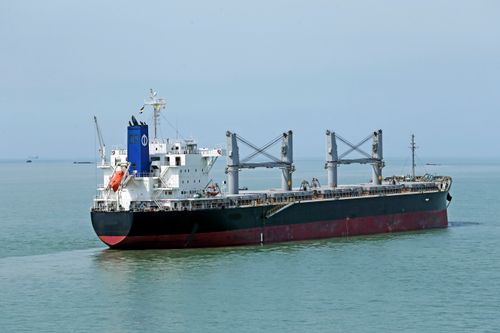
The reason reads like a dispatch from another century. Iran-backed Houthi rebels seized Perim Island this week, a small but brutally strategic rock sitting in the Bab el-Mandeb Strait — a corridor only about twenty miles wide, and one of the most important shipping lanes on Earth for Saudi oil. As Iran has squeezed traffic through the Strait of Hormuz, the Bab el-Mandeb has only grown more important. The Houthis’ ground offensive along Yemen’s Red Sea coast has killed around 500 people and displaced some 46,000, per the United Nations, and Saudi Arabia shut down a pipeline carrying oil to the Red Sea as a precaution after drone strikes launched from Iraq.
Saudi oil exports fell by roughly a third in August compared to July amid the Houthi attacks. Think about that for a moment. A third of the exports from one of the world’s great oil powers, gone in a month. And the market has noticed: Morning Brew reported oil up nearly 8 percent this week alone amid the escalating U.S.–Iran fighting.
Here’s the part that doesn’t make the headlines quite so loudly: China’s role as the world’s largest oil buyer has quietly kept this from being worse. Axios Markets noted this week that China’s pullback from buying helped prevent the worst of the post-Hormuz price spikes. When the biggest customer in the world steps back from the market, even a war premium has trouble holding. It’s a strange kind of mercy — the global economy catching a break because one giant buyer decided to sit this round out.
And yet the break isn’t reaching the pump. It’s not enough to just watch the price of crude and assume you know what families are paying. There’s the crack spread, the refining margin, the local taxes, the station owner’s own thin markup. Diesel — the fuel that moves the trucks that move everything — is at record highs because refineries are stretched and demand from freight never really softened. When diesel costs what it costs now, everything with wheels gets more expensive: the groceries, the packages, the school buses. This week’s consumer price report told the story in one line: gasoline prices up 3.9 percent in a single month, up 27.4 percent from a year ago, one of the main drivers pushing headline inflation to 3.4 percent for the year.
That number has a political half-life, too. We’re about fifty days out from the U.S. midterm elections, and Seeking Alpha’s Wall Street Breakfast flagged the Republican political risk plainly: high energy prices have a way of reaching the ballot box faster than any campaign ad. Presidents don’t set oil prices, but voters rarely grade on a curve. When the man at the pump is doing arithmetic in twenty-dollar increments, he’s also doing a different kind of math — about who’s in charge and whether any of it is working for him.
The human cost extends far past American gas stations. The Financial Times reported this week that wheat prices have surged to their highest since early 2023 on escalating war tensions, and copper hit an all-time high on tariff worries and supply issues. Copper is in the machinery, the electronics, the cars; wheat is in the bread on the table. Gold, the old fear gauge, climbed to $4,465 an ounce — its highest in more than two months — as investors looked for shelter. Energy shocks don’t travel alone. They bring friends.
So where does this leave a household trying to plan? A family I know — two kids, one car that drinks regular unleaded and a heating bill that arrives like a second rent — sat down last Sunday and did what millions of families are doing: they redrew the map. The road trip became a day trip. The grocery list got shorter and smarter. The thermostat got a degree more discipline. Nobody in that kitchen was thinking about Perim Island or crack spreads or OPEC strategy. They were thinking about whether the math of the month still works. That’s what energy prices really are: not a line on a chart, but a thousand small renegotiations between a family and its future.
My take, and I’ll label it clearly as opinion: the market keeps treating each spike as temporary, and eventually that assumption will cost someone. The last few years have taught a hard lesson about how quickly “transitory” becomes “the new normal.” The Strait of Hormuz talks — Gulf foreign ministers are set to meet their Iranian counterparts to negotiate a temporary shipping arrangement — could cool things down. Or they could fail, and $110 becomes the floor instead of the ceiling. The honest answer is that nobody knows, and the people who pretend to know are selling something.
What we can know is this: the economy has absorbed an enormous amount of energy pain this year and kept moving. Freight still rolls. Shelves are still stocked. But the margin for error is getting thinner, and the people with the thinnest margins — the truckers, the commuters, the families at the pump in twenty-dollar increments — feel it first and longest. A serious energy policy, and serious household planning, both start from the same place: respecting what a dollar buys at the pump, and remembering that behind every barrel is someone’s budget.
The man at my pump finished his third click, capped his tank, and drove off into his Tuesday. He’ll be back next week, doing the same arithmetic. The least the rest of us can do — traders, policymakers, neighbors — is make sure the math gets easier, not harder.