
As of 8:30am CT on Wednesday, September 23, Wall Street was waking up to a familiar tug-of-war. Futures on the three major U.S. stock indexes had reversed earlier gains and slipped into the red, with Dow futures down 0.2% to 0.3%, S&P 500 futures off about 0.1%, and Nasdaq 100 futures down around 0.25% to 0.3%, according to Wall Street Journal and Barron’s live market coverage. The culprits were the same two forces that have been shadowing markets all month: oil moving up and Treasury yields moving up.
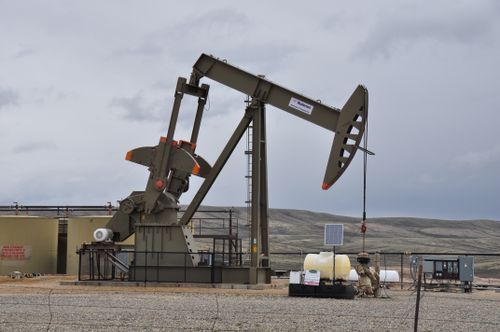
Here is the scene as traders saw it this morning. Brent crude futures traded just above $100 a barrel, rising 0.9% to about $100.10, while West Texas Intermediate pushed back above $90 a barrel. The 10-year Treasury yield climbed to roughly 4.98% to 4.99%, edging toward the critical 5% level, while 30-year yields rose back above 5.30% and 2-year yields sat near 4.79%. The dollar traded near an eight-week high, and traders were pricing a better than 50% chance of another Fed rate hike in October, per Reuters reporting.
What moved oil? A mix of fading diplomacy hope and fresh supply anxiety. On Tuesday at the UN General Assembly, President Trump said U.S. delegations and Iranian officials “had a very good meeting” on the sidelines, the first high-level contact since June, with envoys Steve Witkoff and Jared Kushner meeting Iranian Foreign Minister Abbas Araghchi for more than three hours (USA Today). But the market read the rest of the president’s message warily: he also told the assembly that no deal would come until after the November midterm elections, and the Journal noted diesel prices hit fresh highs as the administration weighed a possible ban on diesel exports. Saudi Arabia restarted partial operations on its East-West pipeline, a key route bypassing the Strait of Hormuz, which had been keeping crude pinned below $100 a barrel earlier in the week (Reuters). Optimism lifted stocks at the start of the week, Bespoke Investment Group noted, but “Wall Street’s patience was wearing thin” as Treasury yields and crude both turned higher (Barron’s).
Tuesday’s regular session ended in a split. The Dow fell 185 points, or 0.36%, to 51,863.69, the S&P 500 finished essentially flat at 7,764.64, and the Nasdaq climbed 122 points, or 0.45%, to a fresh record high of 27,244.28. It was the Nasdaq’s first intraday record since early June, powered by AI enthusiasm after strong reception for Meta’s AI assistant Muse, while the S&P 500 financials sector logged its biggest daily drop since March on “consumer inertia” AI-disruption fears (Reuters).
Overnight, Asia was mixed and thinly traded. Tokyo was closed for the Autumn Equinox and Saudi Arabia was closed for National Day, draining some liquidity. Hong Kong’s Hang Seng fell 1.01% to 24,834.12 and Shanghai’s Composite slipped 0.39% to 3,936.52, while South Korea’s KOSPI held above 7,000 and India’s Sensex rose 0.40% to 74,828.25. In Europe, the STOXX Europe 600 declined 0.31% and the FTSE 100 dropped 0.04% in afternoon trading.
Elsewhere in the premarket: gold futures were down 0.65% and spot gold fell about 1.3% to near $4,302, pressured by the stronger dollar and rising yields, with mining stocks like Freeport-McMoRan and Newmont lower. Bitcoin traded near $85,565, down 0.77%, held back by the firm dollar even as spot Bitcoin ETF inflows improved. VIX futures fell 2.79%, a sign that, for all the red on the screen, outright fear has not taken hold.
Why it matters: the market’s center of gravity has shifted from “will the Fed cut?” to “will the Fed hike again?” With the 10-year knocking on 5% and crude back in triple digits, the easy gains in this rally have already been banked. What decides the next move is the data flow and the diplomacy flow, and today offers both.
What to watch next: Chinese President Xi Jinping is expected to arrive in Washington later today ahead of Thursday’s state visit and summit with President Trump, covering the trade truce, AI regulation, arms sales to Taiwan, and Iran. U.S. markets open at 9:30am ET. (My take: if Xi’s arrival produces even a whiff of tariff-truce confidence, futures could flip quickly. If not, 5% on the 10-year is the level that will dominate the day’s commentary.)