
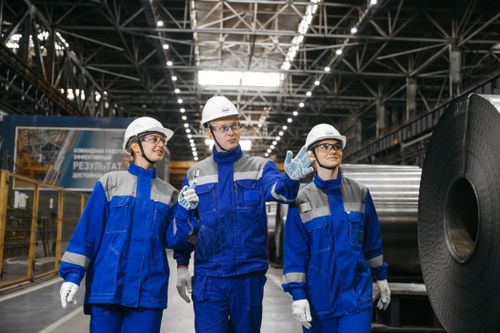
Jamal is 26. He fixes industrial HVAC systems in the suburbs of Dallas, a trade he learned in a two-year program after deciding college debt was not for him. For years, family gatherings came with the same gentle, pitying question: when was he going back to school to get a “real” degree? Lately, the tone has changed. His cousin with the finance degree just got laid off from an entry-level analyst job that, the company explained, AI can now do cheaper. Jamal, meanwhile, got a raise. He is not an anecdote anymore. He is a data point in one of the most important labor market reversals in decades.
Workers aged 22 to 34 without college degrees are seeing one of the best job markets in nearly two decades, according to a Burning Glass Institute analysis reported by Morning Brew on September 15 — with one of the lowest unemployment rates for that group since 2003. Read that again: the best job market in almost twenty years, for young workers without degrees. For a generation raised on the unquestioned gospel that the diploma is the ticket, this is not a blip. It is a reordering.
The numbers tell the story in layers. For the year ending in July, degree-holders aged 25 to 54 averaged 2.7 percent unemployment, compared with 4.7 percent for workers with only a high school diploma, Morning Brew reported. The gap persists — the degree still buys security. But the direction of travel is what matters: employers are hiring skilled hands faster than they are hiring credentialed juniors, and the premium on a bachelor’s degree at the entry level is quietly eroding. The overall labor market, meanwhile, keeps grinding forward: U.S. employers added 162,000 jobs in August, with unemployment steady at 4.1 percent, according to the Bureau of Labor Statistics via Reuters and the Motley Fool. (July was revised down to just 21,000 new jobs, the Journal noted — a reminder that the headline number always deserves a second look.)
Why is this happening? Start with the obvious: you cannot offshore an electrician. The skilled trades — HVAC, plumbing, electrical, welding, diesel mechanics — require a human body on site, and a generation of retirements has thinned the pipeline of people who can do the work. Infrastructure spending, data center construction, and a manufacturing revival have poured demand onto a shrinking supply of hands. When demand meets scarcity, wages rise. Jamal’s raise is not luck; it is supply and demand doing what the textbooks say.
Then there is the other side of the coin, and it is made of silicon. BCG’s James Tucker told Fortune’s CFO Daily that AI is rewriting entry-level finance jobs — the exact rung of the ladder where the cousin with the finance degree was standing. The pattern is becoming familiar: artificial intelligence is best at the routine, screen-based, junior-analyst work that used to be the on-ramp for white-collar careers, while the physical, judgment-heavy, on-site work of the trades remains stubbornly human. The diploma’s monopoly on prosperity was built on the assumption that knowledge work was the safe bet. AI is revising that assumption in real time.
None of this means college is obsolete — the 2.7 versus 4.7 percent unemployment gap is real, and over a lifetime the degree still pays. But the margin is narrowing at the entry level, and the cultural story is lagging the economic one. Parents still push the four-year degree as the only respectable path while employers quietly bid up the wages of the kid who can wire a panel or braze a refrigerant line. The stigma against the trades is now, measurably, a financial mistake.
But it’s not enough to just celebrate the trend and move on. It’s not enough to treat Jamal’s raise as a feel-good story. We must listen to what the labor market is actually rewarding — applied skill over generic credentials — learn how the economics of scarcity now favor the trades, and contribute to a culture that respects the work — because a society that needs electricians but shames the path to becoming one will get the shortage it deserves.
My take: the deeper story here is about what AI cannot do, and it is more hopeful than the headlines suggest. Every wave of automation anxiety has assumed the safe jobs are the ones done at desks. This wave is inverting that: the desk jobs are the exposed ones, and the jobs that require showing up, touching things, and solving physical problems in real time are the fortress. That does not mean the trades are “AI-proof” forever — diagnostics, scheduling, and estimating are already being automated around the edges. It means the durable human advantage is embodied skill plus judgment, and we should be steering young people toward it with the same enthusiasm we once reserved for the quad. The best job market in twenty years for young workers without degrees is not a consolation prize. It might be the main event.
For regular people, the practical translation is refreshingly concrete. If you are a parent of a teenager: a two-year trade program with near-guaranteed employment and no debt deserves the same dinner-table respect as an acceptance letter — run the actual numbers on debt versus starting wages before deciding which path is “safer.” If you are a young worker without a degree: this is your window; apprenticeships and certifications in electrical, HVAC, plumbing, and welding are the highest-return credentials in the economy right now, and employers are competing for you. If you are a white-collar worker watching AI eat the entry level: the lesson is not to learn a trade tomorrow, but to move up the judgment ladder today — the routine parts of your job are the vulnerable parts, so become the person who handles the exceptions, the clients, and the decisions. And if you are hiring: the wage premium for skilled trades is not a temporary spike, so build it into your budgets and your retention plans now.
Jamal’s family has stopped asking when he is going back to school. The better question — the one the labor market is asking all of us — is when our assumptions about work will catch up to the economy we actually have. The diploma had a good run as the sole ticket. The ticket booth just added a second window, and the line is moving fast.