
When a lender quotes your debt at 90 cents on the dollar, it is telling you something. It is saying that for every dollar you owe, the market will only pay ninety cents to take that IOU off the lender’s hands. That is not a rounding error. That is a market vote of no confidence, and it is exactly what happened to roughly $18 billion in loans tied to an Oracle-leased data center in New Mexico.
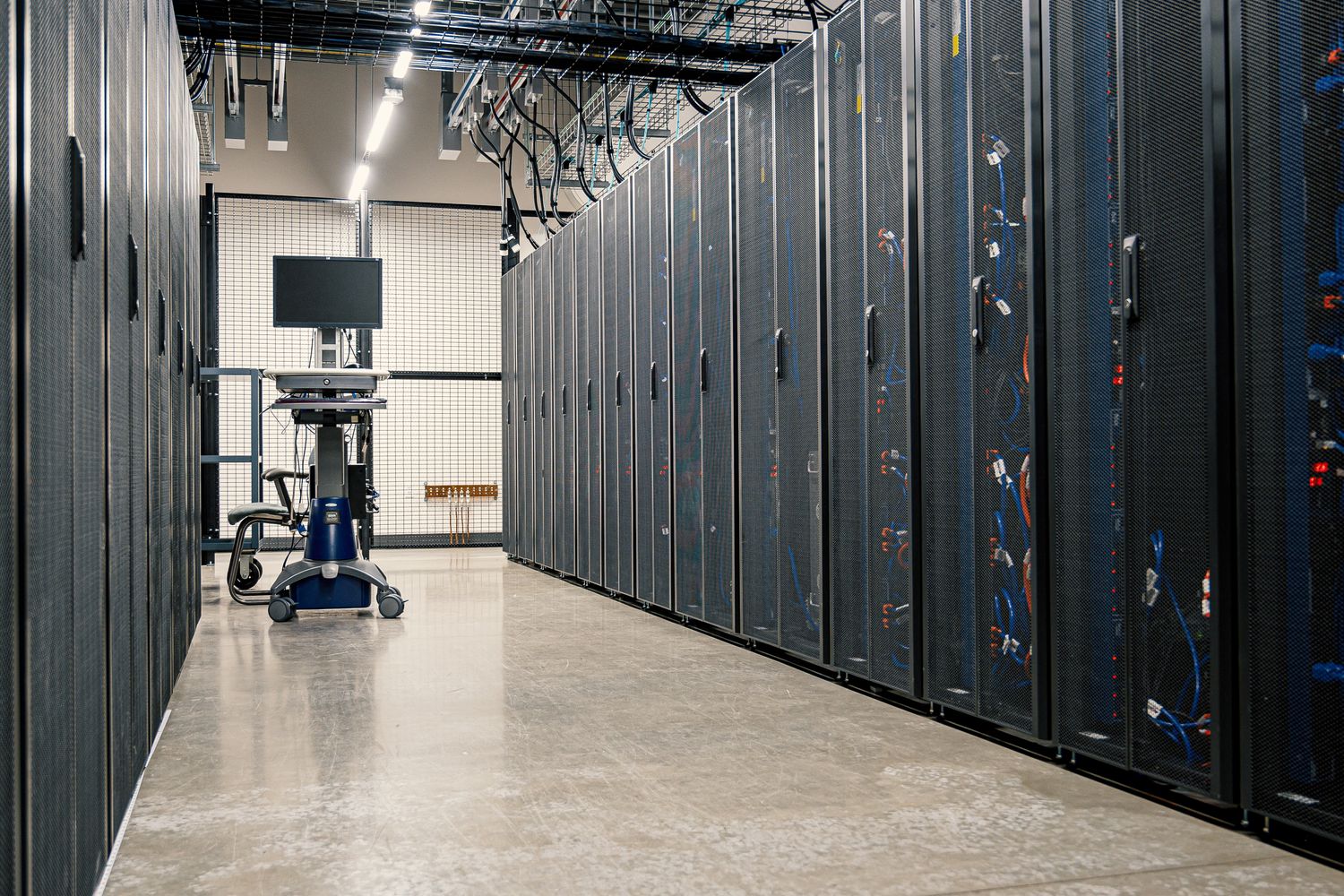
Here is the story, told plainly. About $18 billion in loans financing the project, a 1,400-acre campus called Project Jupiter in Dona Ana County, have come under pressure, with syndicate banks including Santander and Jefferies quoting them at 89 to 91 cents on the dollar, the Financial Times reported, via Reuters. The campus is part of Oracle’s agreement with OpenAI to supply artificial-intelligence computing capacity, and it sits inside Stargate, the $500 billion push to build AI infrastructure across the United States led by OpenAI, SoftBank, and Oracle.
To understand why this matters, you need to understand how these loans were supposed to work. When a company wants to build something enormous, a data center the size of a small town, for instance, it rarely pays cash. Instead, a group of banks lends the money up front as a loan package, with the plan to sell pieces of that debt to other investors: pension funds, insurers, asset managers, anyone hungry for yield. This process is called syndication, and it is how the modern credit market moves big risks off bank balance sheets and into the hands of people who want them.
The syndication has stalled. Efforts to sell the debt to a broader pool of investors have gone nowhere amid concerns over Oracle’s rising borrowing and weakening creditworthiness, the FT reported via Reuters. The banks are now stuck holding more of the loans than they ever intended. Forced sellers in a market with no buyers is how discounts are born, and 89 to 91 cents on the dollar is a loud discount. In the loan market, quality debt trades at or near face value. A 9% to 11% discount is the market saying it needs to be paid extra to take on this risk.
Why the hesitation? Start with the borrower. Oracle’s corporate credit rating sits one notch above junk following a downgrade from S&P in July, Reuters reported. The company has been ramping up spending to finance its AI infrastructure expansion while forecasting up to $95 billion in capital expenditure for fiscal 2027, though it expects customer repayments for up to $25 billion of that. Read those two numbers together and you see the tension: Oracle is spending at a pace its own customers only partly cover, borrowing to bridge the gap, and asking the credit markets to believe the returns will arrive.
Then add the ground-level problems. Local opposition to the New Mexico project has grown over fears about water supply and air quality, the FT reported via Reuters. Project Jupiter was initially set to be powered by 2.2 gigawatts of gas turbines, but the state land office blocked a request to run a natural gas pipeline to the site. A data center with uncertain power, contested water, and unhappy neighbors is a harder sell to debt investors than a spreadsheet of projected AI revenue.
This is where a quote from economist Mohamed El-Erian lands with weight. He recently warned of a growing structural risk that “interest rate risk could mutate into credit risk” as corporate borrowers confront an approaching wall of debt coming due, he told Benzinga. That is exactly the dynamic on display here. Rising yields make debt more expensive to carry. Borrowers loaded up on borrowing when rates were cheap. Now the loans are trading at discounts, the borrowers look shakier, and the risk moves from the bond market into the loan books of actual companies.
It is worth being careful about what this is and is not. These loans are among the first pieces of AI-infrastructure debt to be quoted below face value. That makes them a signal, not a verdict. A signal says investors are starting to ask hard questions about whether AI buildout spending has outrun the returns. A verdict would require defaults, restructurings, or a broad repricing of AI credit, and none of that has happened. The distinction matters, because the market has a habit of treating the first tremor like an earthquake.
But signals deserve attention from anyone with a retirement account or a savings plan. Here is the everyday version of what is happening. The AI boom you read about is being built partly with borrowed money, at interest rates near 19-year highs, by companies whose credit ratings are drifting toward junk. If those data centers fill up with paying customers, the debt looks brilliant in hindsight. If they do not, or if the timeline slips, the discounts widen, and the people left holding the loans are the banks and the pension funds that bought them.
My take: the Oracle loans are a thermometer, not a fire. Check back on them the way you would check a fever. If the quotes stabilize or the syndication finally clears, the market has decided the AI buildout is financeable at these rates. If the discount deepens or spreads to other AI-infrastructure debt, the conversation changes from a single project’s troubles to a genuine credit question hanging over the entire AI trade. Either way, the next few months will tell us what the loans are already whispering: the AI boom is entering the part where it has to prove it can pay for itself.