Companies have a new favorite way to raise money: borrow billions of dollars and pay zero interest on it. U.S. companies have sold a record $131 billion in convertible bonds this year, according to Bloomberg data, blowing past the previous annual record set two years ago (Unbiased Headlines). Global issuance of zero-coupon convertibles hit $72 billion by late August, putting 2026 on track to beat 2025’s full-year record of $73 billion (Finimize). August alone brought $25 billion in convertible bond sales, a staggering single-month haul (Crypto Briefing).
How is that possible? To understand, start with what a convertible bond is. It is a hybrid: part loan, part stock option. A company borrows money from investors and promises to pay it back, like a normal bond, but the investor also gets the right to convert the bond into company stock later at a predetermined price. Investors accept a lower interest rate than they would on a regular bond because they are also buying a lottery ticket on the stock going up.
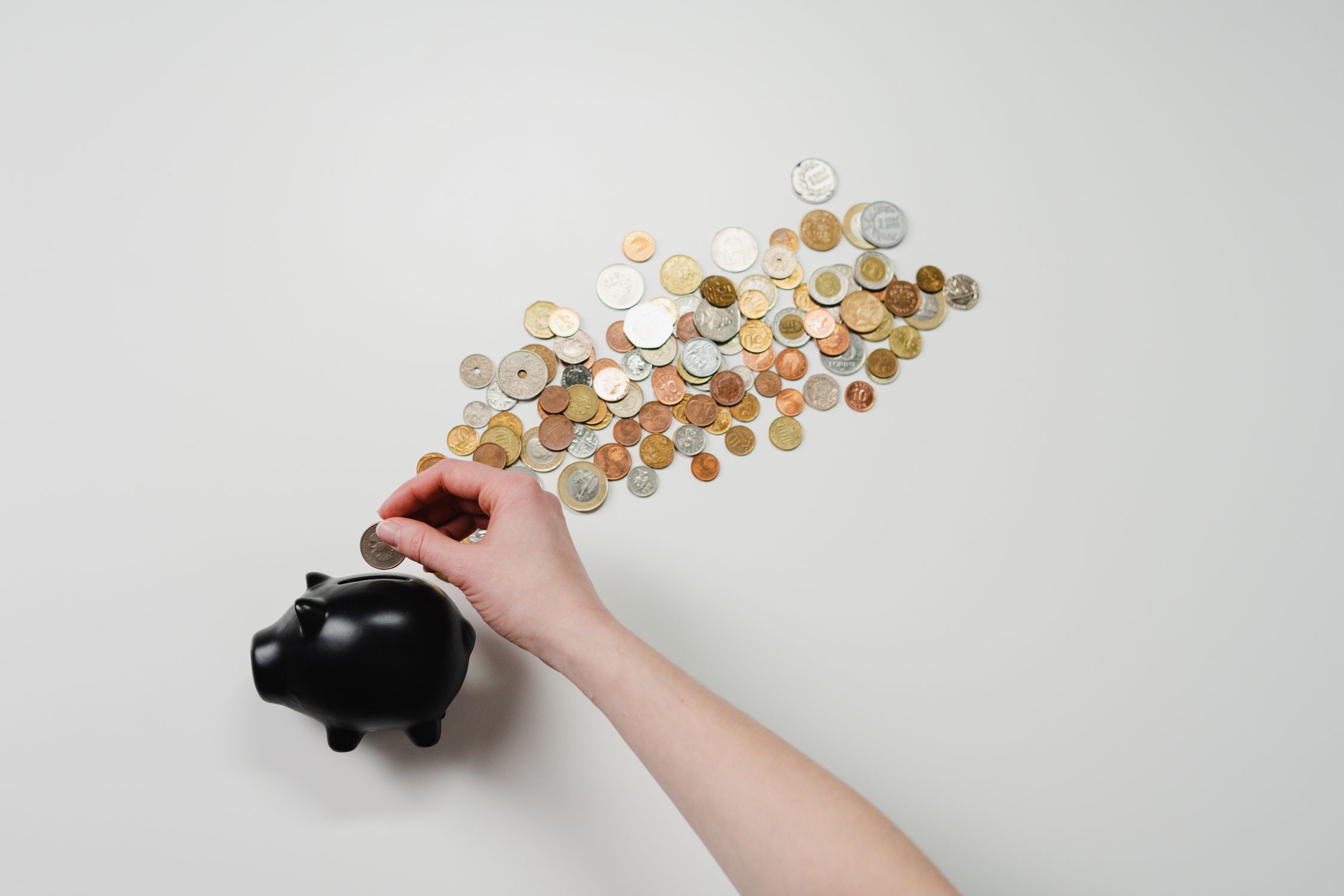
A zero-coupon convertible takes that trade to the extreme. The coupon, the interest payment, is zero. The bondholder gets no interest at all, period. They are betting entirely on converting into stock later, once the shares rally hard enough (Unbiased Headlines).
Why would any investor accept that deal? Volatility. The conversion option becomes more valuable when a stock’s price swings around, because bigger swings mean a bigger chance the stock blasts past the conversion price. With AI-linked shares doing plenty of swinging, investors are willing to sacrifice regular interest payments for cheap exposure to potential future gains (Finimize). In effect, the investor is saying: keep your interest payments, I want the upside.
And why would a company choose this over a normal bond or a stock sale? Three reasons. First, it is cheap. When global borrowing costs sit near multidecade highs everywhere else, raising money at 0% is an extraordinary outlier (Unbiased Headlines). Second, it avoids immediate dilution. A traditional stock offering dumps new shares on the market right away, pushing the price down. Convertibles only dilute existing shareholders if and when the stock hits the conversion price. Third, unlike straight debt, the obligation can disappear: if the company does well and bondholders convert to equity, the debt effectively vanishes (Crypto Briefing).
The deals driving the boom read like an AI supply-chain directory. CoreWeave tapped the market for $4 billion. Oracle raised $5 billion. ON Semiconductor issued $1.3 billion in zero-coupon convertibles, and Ciena followed with a $2.9 billion zero-coupon deal (Crypto Briefing). On August 31, Taiwanese chip designer MediaTek priced a $3.9 billion bond that pays zero interest for five years; Nvidia bought $3.5 billion of it, with Alphabet taking a slice too (Unbiased Headlines). Two of the most cash-rich companies on earth essentially handed a chip designer billions for free, in exchange for the right to convert into its stock down the road. In Hong Kong, Chinese AI firm Z.AI agreed to issue about $3 billion in zero-coupon convertible bonds alongside a share placement, with roughly 60% of proceeds earmarked for research and development (TechNode).
Roughly half of this year’s convertible issuance is tied to AI initiatives, as companies race to build data centers, buy chips, and deploy infrastructure (Crypto Briefing). Zero-coupon deals account for about 41% of U.S. convertible issuance in 2026, according to Dealogic (Crypto Briefing).
So what is the catch? There are two, and both matter to anyone holding these companies’ stocks.
The first is dilution, delayed but real. Higher bond yields are making investors demand sweeter conversion terms, and if the stock does well, bondholders convert and existing shareholders own a smaller slice of the company (Finimize). Convertible-arbitrage funds, which buy the bonds while shorting the stock to hedge, can also add near-term selling pressure on the shares even as the company’s balance sheet improves (Finimize).
The second is what happens if the music stops. The whole structure rests on AI stock volatility staying high. If volatility fades, investors will start demanding actual interest again, and the free-money window closes (Finimize). S&P has already warned that AI financing is getting bigger and more complicated, putting the pristine credit ratings of Big Tech hyperscalers at risk (Axios Markets). Debt that costs nothing today can still reshape a balance sheet tomorrow.
For the rest of us, the takeaway is less about the instrument and more about what it reveals. When Nvidia and Alphabet are buying a rival chipmaker’s interest-free debt, and when $131 billion of convertibles can be sold in nine months, the market is telling you two things at once: AI companies are desperate for capital, and investors are so hungry for AI upside that they will lend for free to get it. That is either the rational funding of a historic buildout or the kind of euphoria that looks obvious in hindsight. The zero coupon does not tell you which. It only tells you how confident the buyers are right now.