
There is a moment in every market rally when the story stops being about one stock and starts being about everything at once. Monday was that kind of day. The Nasdaq composite rose 2.3 percent to its first record close since June, and it got there on the back of a single, sweeping idea: that artificial intelligence, after a spring and summer of anxiety, is becoming a source of cooperation and cash flow rather than just risk.
To understand why that matters to anyone with a retirement account, it helps to unpack what actually happened on Monday, piece by piece, because the rally had three distinct engines, and all three were firing at once.
Engine one: the chips. The iShares Semiconductor ETF (SOXX) rose 4.5 percent on Monday, according to Investopedia. Advanced Micro Devices climbed 9.5 percent to an all-time high. Intel jumped 12 percent. Arm Holdings surged 16 percent. Roundhill’s Memory ETF rose 3.5 percent as Seagate Technology and Micron Technology gained. This was not a quiet drift higher; these were the kinds of single-day moves that usually arrive with earnings reports or takeover bids. They arrived on Monday with neither. What they arrived with was a sense that demand for AI hardware is not slowing down, and that investors who sold chip stocks in the summer are being pulled back in.
Engine two: the platforms. Meta Platforms rose more than 11 percent on Monday, on pace for its highest close of 2026, amid enthusiasm for its Muse AI agent, according to The Wall Street Journal. Think about what an AI agent means in plain terms: software that does not just answer questions but completes tasks, books, buys, schedules, drafts, follows up. If Meta’s bet pays off, the company’s vast user base becomes a distribution channel for something customers pay for monthly, the way businesses pay for software today. Markets reward that kind of story quickly when they believe it, and on Monday they believed it.
Engine three: the diplomacy. This is the engine most people missed, and it may be the most important. Over the weekend in New York, American and Chinese officials held talks ahead of Chinese leader Xi Jinping’s visit to the United States later this week, and artificial intelligence was a major focus. Treasury Secretary Scott Bessent said afterward that the two sides had discussed setting up a “U.S.-China AI Dialogue,” and separately that they discussed a “notification mechanism” for AI incidents that could affect national security, according to the Journal.
Why should a line of diplomatic boilerplate move stock prices? Because the single biggest overhang on the AI trade in 2026 has not been technology; it has been the fear that Washington and Beijing will spend the decade strangling each other’s supply chains. Every export control, every tariff threat, every headline about chip restrictions takes a little off the value investors assign to companies that sell into both markets. A dialogue, a notification mechanism, a scheduled meeting between the two presidents: each of these is a small piece of evidence that the relationship will be managed rather than detonated. Managed risk can be priced. Detonation cannot.
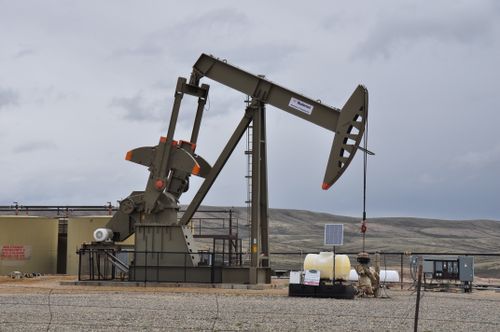
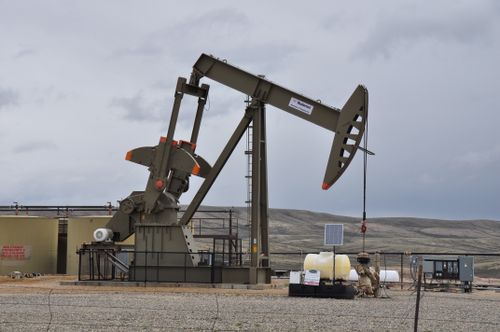
Oil played its part too. Brent crude futures dropped 3.4 percent to near $100 a barrel, a fourth straight day of losses, while U.S. benchmark crude fell 4.5 percent to $95.78, according to the Journal. Lower energy prices cool inflation expectations, and cooler inflation expectations cool bond yields: the 10-year Treasury traded down to 4.962 percent. When yields fall, the math of valuing growth stocks gets friendlier, because future profits are discounted at a lower rate. This is the mechanical link between the gas pump and the Nasdaq, and on Monday it worked in investors’ favor.
Now the honest part: what could go wrong. A 2.3 percent day built on diplomacy and falling oil is a day built on things that can reverse. If the Trump-Xi meeting later this week produces no agreement, or worse, new friction, the optimism premium embedded in Monday’s prices comes right back out. Yields are still near 5 percent, a level that has repeatedly capped rallies this year. And single-day surges of 12 or 16 percent in individual chip stocks are a reminder that positioning, not just conviction, is doing some of the work.
My take: Monday’s rally was real, not just technical. The combination of falling energy costs, genuine corporate enthusiasm (Meta’s agent, the chip orders implied by those stock moves), and a credible diplomatic catalyst is exactly the mix that sustains rallies rather than just sparking them. But it is also fragile in a specific way: it depends on the rest of this week’s calendar cooperating. Tuesday brings Fed speakers and the Richmond Fed manufacturing index; Wednesday brings flash PMIs; and looming over everything is the Trump-Xi meeting. If you are a long-term investor, days like Monday are for confirming your plan, not changing it. The AI story is bigger than any single session, and it will be tested again, many times, before it is settled.