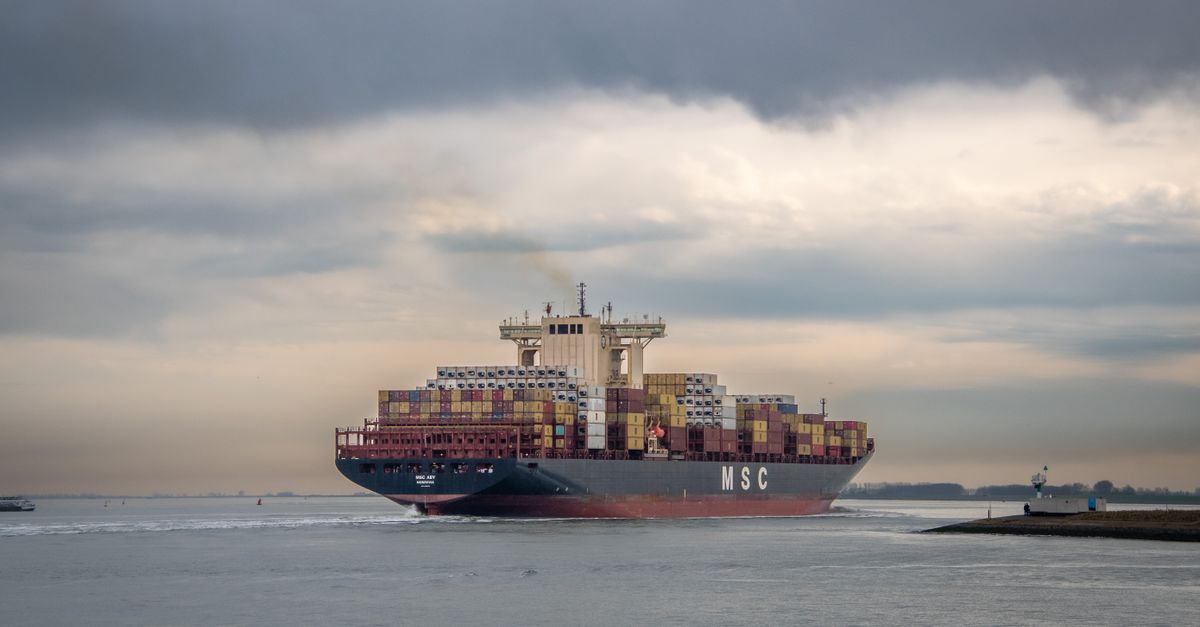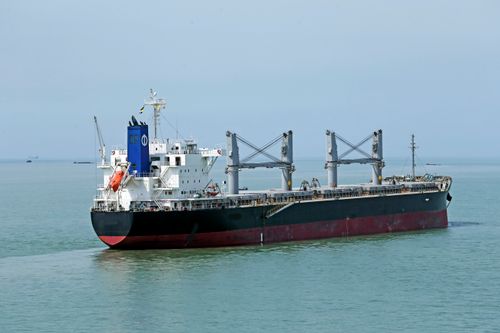
A dozen commodity vessels transited the Strait of Hormuz over the weekend, down from 35 the prior weekend, according to preliminary data from analytics firm Kpler reported Monday by Reuters. Before the war between the United States, Israel, and Iran began on February 28, the strait typically handled about 125 large commercial vessels every single day.
Read that again. The most important energy chokepoint on earth, the conduit for a fifth of the world’s oil and liquefied natural gas before the fighting started, is now moving roughly a tenth of its normal traffic, and some of what does move is doing it in the dark.
What the tracking shows
The weekend’s visible traffic tells its own story. Among trackable ships, four vessels, two tankers carrying refined oil products and two empty carriers for bulk goods and gas, exited the strait on Sunday, while another two small oil tankers entered the Gulf, Kpler’s provisional data showed. On Saturday, five vessels left the Gulf carrying agricultural products, liquefied petroleum gas, and fertilizer, while an empty very large gas carrier entered.
Those are the ships with their transponders on. Middle Eastern producers continue to export oil on tankers traveling with their transponders switched off, so the real number is higher than twelve. But analysts are clear that even counting the dark traffic, current volumes are a small fraction of the roughly 17 million barrels of oil that used to pass through the waterway daily before the crisis. Operators are choosing invisibility over efficiency, which tells you everything about how they assess the risk.
The risk is not theoretical. U.S. forces struck three Iranian oil tankers earlier this month, according to U.S. Central Command, and Iran’s Revolutionary Guard navy said it targeted tankers traveling unauthorized routes in retaliation. The United Kingdom Maritime Trade Operations has counted 27 projectile strike incidents since July 6 involving vessels in and around the strait.
The strange case of falling oil prices
Here is the part that might surprise you. With shipping through Hormuz reduced to a trickle and the U.S. and Iran in a stalemate, oil prices fell on Monday. Brent crude dropped more than 2 percent to about $101 a barrel, its fourth straight day of losses. The 10-year Treasury yield eased to around 4.96 percent.
Why would oil fall while the world’s key oil artery is nearly blocked? Part of the answer came from an unexpected direction. President Trump claimed that Ukraine had agreed to halt its strikes on Russian energy targets, and that claim coincided with Monday’s pullback in both oil prices and Treasury yields, according to Axios Markets. Ukrainian drone strikes had crippled large swaths of Russia’s refining capacity in recent weeks, creating shortages and forcing Russian officials to curtail exports to shore up domestic supplies. Any pause in those strikes eases one source of supply pressure, even as Hormuz remains constricted.
The other part of the answer is that markets had already priced in weeks of tension. Just last Thursday, the U.S. benchmark crude spiked 8 percent to $103 a barrel as borrowing costs rose and global nervousness intensified. Friday’s close left West Texas Intermediate at $99.53. Monday’s decline looks less like relief and more like a market catching its breath, unsure which risk to weigh more heavily.
The bond market is telling a similar story of unease. The 10-year Treasury yield eased to around 4.96 percent on Monday, down on both sides of the Atlantic, but it remains near its highest since 2007. Yields that high reflect two worries at once: energy-driven inflation pressure from the Gulf standoff, and the Federal Reserve’s new hiking cycle under Chair Kevin Warsh, which has already lifted the benchmark rate to 3.75 to 4 percent. When oil and borrowing costs rise together, the squeeze lands on households and businesses at the same time, which is exactly the combination central banks fear most.
What escalation could look like
Nobody should mistake a down day in oil for a resolution. Iran claims the United States is planning to renew its bombing campaign, according to The Guardian’s September 20 reporting. Trump told a Fox News reporter that “very big things are going to be happening in the not-so-distant future,” and laid out his options as “wiping Iran out, letting them rot economically or making a deal.”
Goldman Sachs has raised its Brent and West Texas Intermediate price forecasts for December 2026 through 2027, expecting shipping disruptions in the Middle East to continue into next year. When the most influential forecaster on Wall Street tells you to plan for another year of this, it is worth listening.
What it means for a household budget
Energy shocks do not stay in the strait. They show up at the pump and in the mailbox.
Axios Markets reported on September 15 that home heating oil bills are likely to be enormous this winter in the Northeast, and that U.S. gasoline averaged $4.15 per gallon for regular that Tuesday, according to AAA. A separate national report put the average at about $4.33. Either way, American drivers are paying prices shaped directly by two parallel conflicts, in Iran and Ukraine, that show no sign of ending.
For a family, the practical consequences are straightforward. Fuel costs feed into the price of nearly everything that moves by truck, which is nearly everything. Heating oil customers, concentrated in the Northeast, face a winter where a single fill-up can run into four figures. And the Federal Reserve, which raised its benchmark rate to 3.75 to 4 percent on September 16 precisely because inflation remains elevated, watches energy prices as one of the forces that could keep inflation from coming back down.
The strait will keep making headlines in the weeks ahead. The number to watch is not just the price of oil but the count of ships. Twelve vessels where there used to be 125 is the market’s way of saying the risk has not gone away, even on the days when prices fall. It is also worth watching the gap between the visible traffic and the real traffic: every tanker that crosses with its transponder off is a barrel of oil the market cannot see, price, or plan around, and invisible supply makes for jumpy prices. When the ships come back, in daylight, with their transponders on, that is when you will know something has actually changed.