
As of 8:30 a.m. CT Sunday, Wall Street is still asleep, but the homework for this week is already piled up on the desk. The three-day summit between President Donald Trump and Chinese President Xi Jinping wrapped up on Friday with the first mutual tariff rollback in a trade fight that has run for the better part of two years: both governments agreed to cut duties on $30 billion of goods flowing in each direction and to open a formal dialogue on artificial intelligence, a channel that did not exist before last week (TradingView, via Reuters).
The details tell you exactly what kind of deal this is. On the American side, the favored treatment covers exports like farm products, timber, and beauty items. On the Chinese side, it covers compact appliances, toys, and decorations. The White House described the band as $30 billion of non-sensitive goods each way, and the two governments also operationalized a U.S.-China Board of Trade to keep negotiations moving (IndexBox). Treasury Secretary Scott Bessent said the two sides agreed to push back by two months a trade truce that had been scheduled to lapse on November 10, creating more room to chase a bigger agreement. The AI dialogue may matter more than the dollars: Xi said the two countries share a responsibility to keep AI under human control, while Trump said AI would be a standing topic in the new talks.
Here is my honest read on it: $30 billion is a rounding error against annual U.S.-China trade, and the hardest categories, semiconductors, advanced manufacturing inputs, the national-security tariffs, were left untouched. The effective U.S. tariff rate on Chinese goods sits around 23%, well above what America levies on other major partners (Barclays, via London Insider). What changed is the direction of travel. For two years the ratchet moved one way. This is the first time both capitals loosened it at the same moment.
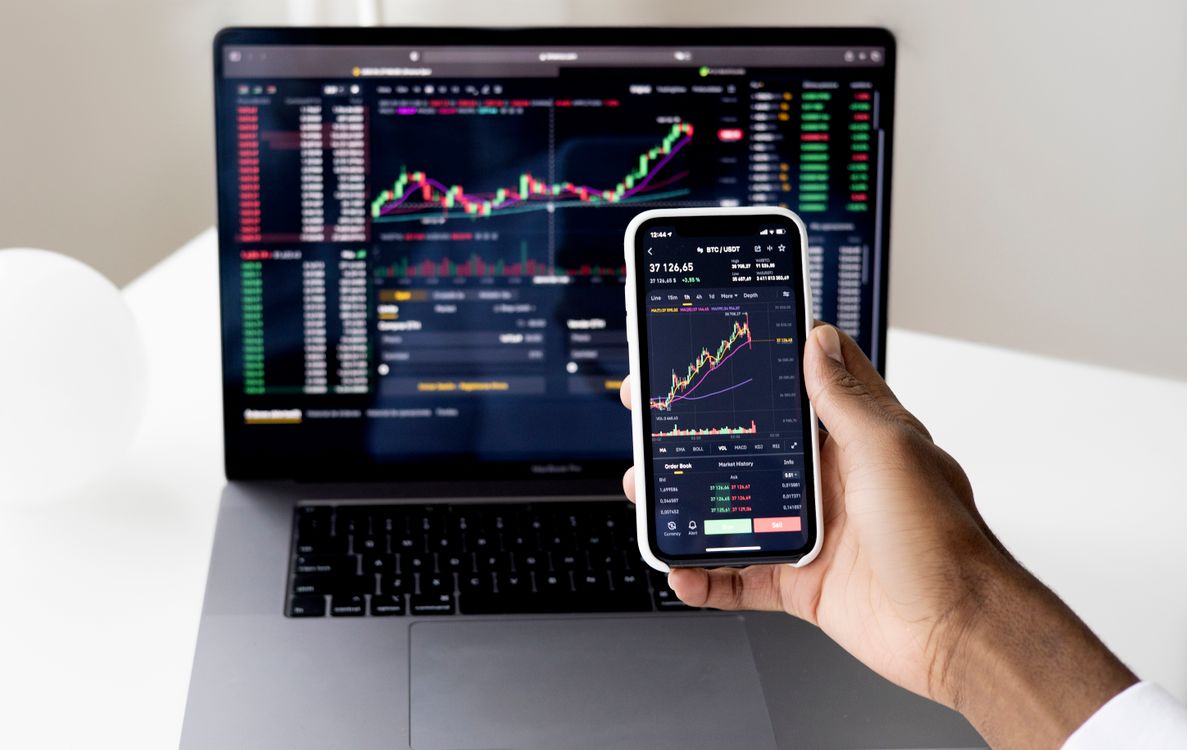
The market’s first verdict was a shrug with a smile. The S&P 500 closed Friday at 7,743.41, up 1.2% on the week, its first winning week in three, and now sits within 0.7% of its August 13 record of 7,798.99 (AP via Barchart). Bitcoin traded around $84,835 on Sunday morning while traditional markets slept (ThriveInMarkets). But the farmers who were promised a windfall got a lesson in summit arithmetic instead: Chicago soybeans slid as much as 1%, corn and wheat touched one-month lows, and palm oil fell 2.2%, because the summit produced no immediate purchase announcements (Bloomberg, via BusinessMirror).
Now the week has to do the heavy lifting. Here is the calendar that will decide whether this rally runs or rolls over:
Tuesday brings August JOLTS job openings and September consumer confidence, both at 10 a.m. ET. July JOLTS printed 7.27 million openings against a 7.30 million estimate (Econoday data recap). Wednesday is the monster: August PCE at 8:30 a.m. ET, the Fed’s preferred inflation gauge, alongside the final Q2 GDP estimate, ADP employment at 8:15 a.m., and Micron earnings after the close. Consensus expects headline PCE of +0.4% month over month and core at +0.3%, both accelerating from July’s +0.2% (Trading Economics). Thursday delivers September ISM manufacturing and weekly jobless claims, plus Nike earnings after the bell. Friday at 8:30 a.m. ET is the main event: the September employment report, expected to show roughly 100,000 new jobs and an unemployment rate ticking up to 4.2% from 4.1% (Trading Economics).
Fed officials will be everywhere. Goolsbee and Musalem speak Tuesday, Williams and Barkin on Wednesday, Cook, Kashkari, and Barkin on Thursday, and Williams and Logan on Friday (TradingView). They are speaking two weeks after a unanimous quarter-point hike that took the target range to 3.75% to 4.00%, with the 10-year Treasury at 5.17% and the 30-year at 5.49%, a level it has not seen in more than two decades (CoinCentral).
That is the backdrop worth sitting with on a Sunday morning. A handshake opened a door that has been shut for two years. But it is Wednesday’s inflation print and Friday’s jobs number that decide what your mortgage, your credit card, and your savings account cost next month. The diplomacy gave the market permission to hope. The data decides whether it was right.