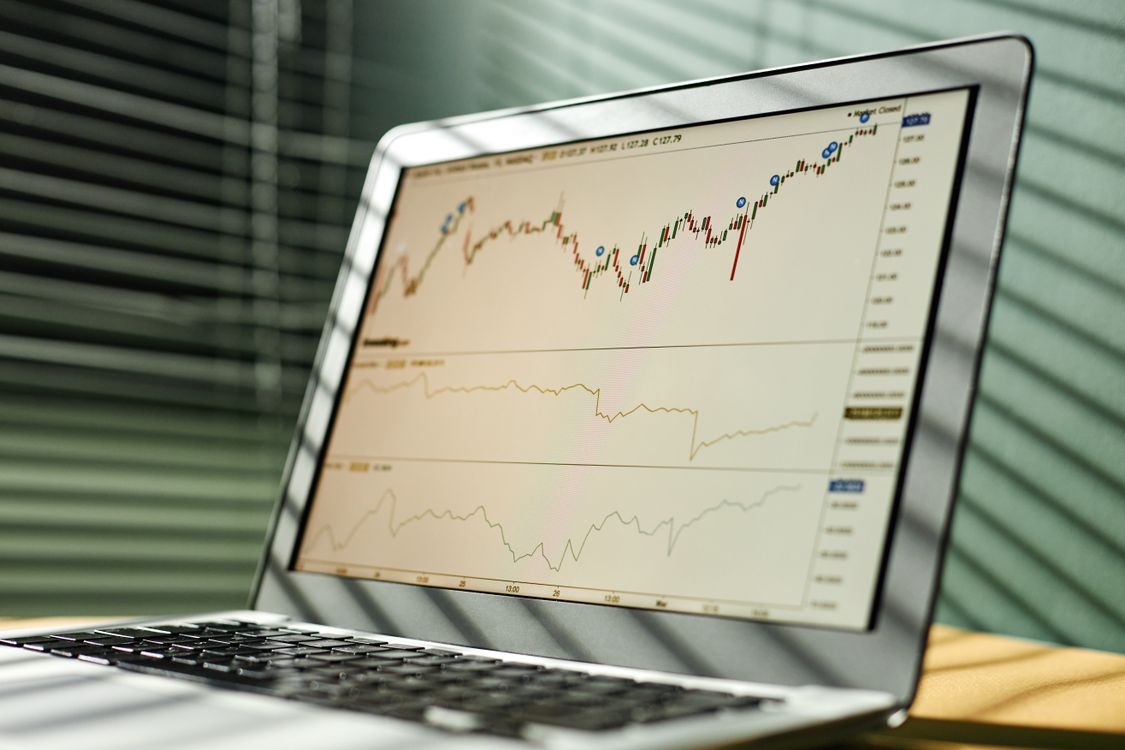

There is a number that quietly prices almost everything in your life, and this week it reached a level most working adults have never seen. The yield on the 10-year Treasury note climbed as high as 5.12% on Wednesday, touched 5.16% on Thursday, and on Friday hit an intraday peak of 5.23% before settling at 5.17%, its highest since the 2008 financial crisis (channelchek.com, TheStreet). The 30-year Treasury yield breached 5.5% for the first time since 2004 (Barron’s). In one month, the 10-year has risen 50 basis points; in two days alone, it jumped 30 (The Kobeissi Letter, via moneycheck.com).
Stop for a second and think about what the 10-year yield actually is. It is the interest rate the U.S. government pays to borrow money for ten years, and because the U.S. government is considered the safest borrower on earth, everything else gets priced on top of it. Your mortgage rate is the 10-year yield plus a spread. The rate on your car loan, your credit cards, the loan your employer takes to expand the warehouse, all of it starts here. When the 10-year goes from the low 4s to 5.2%, the cost of money for the entire country goes up. That is why a bond selloff is never just a bond story. It is a story about your paycheck’s purchasing power, your rent, your grocery bill, and whether your neighbor can afford to move.
So why is this happening? The honest answer is that the bond market and the economy are telling two stories, and the bond market is siding with the scarier one.
The first story is about strength. U.S. business activity expanded in September at its fastest pace in more than five years. Weekly unemployment claims fell to 197,000, near historically low levels. August retail sales rose 1.2% month over month and 6.0% year over year. As dimsumdaily.hk reported on September 24, robust business activity reinforced the view that price pressures remain sticky, and a resilient labor market makes the path to lower inflation more complicated. A strong economy usually means higher rates, because lenders demand more compensation when growth keeps prices warm.
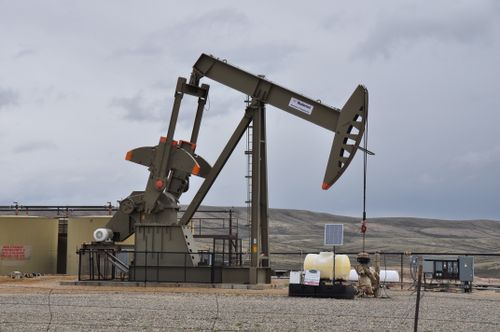
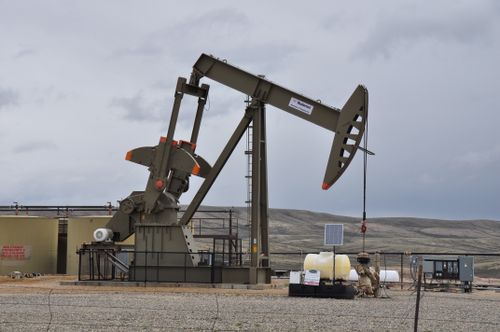
The second story is about fear, and it has three chapters. Chapter one is oil. Crude has advanced again, and summamoney.com reported on September 25 that U.S. gas prices neared $4.50 a gallon on average, with West Texas Intermediate near $92 a barrel and Brent near $105. Every dollar at the pump is a tax on households, and it feeds straight into inflation expectations. Chapter two is the Federal Reserve itself. New York Fed President John Williams said it would be reasonable to expect another rate hike before year-end, echoing Fed Governor Michael Barr’s comments a day earlier, a coordinated message that follows Fed Chair Kevin Warsh’s hawkish Jackson Hole speech (channelchek.com). Traders are now pricing two more quarter-point rate hikes by January (Barron’s), and fed funds futures show a better than 60% chance of a hike as soon as October (mtrushmorecrypto.com). Deutsche Bank’s Matthew Luzzetti is calling for Fed hikes in both December and March (Bloomberg Surveillance, via academyinfo.net). Chapter three is supply: the U.S. government keeps issuing enormous amounts of debt, and someone has to buy it. When buyers hesitate, prices fall and yields rise. That is the mechanic sitting underneath everything.
The most interesting voice in this debate belongs to Rick Rieder, BlackRock’s chief investment officer of global fixed income, who manages around $2.4 trillion in assets and was reportedly a finalist for the Fed chair job that went to Warsh. On Yahoo Finance’s “Sozzi Unleashed” this week, Rieder called the bond move “not a crisis but an eye-opener,” and then said something worth sitting with: he expects 10% to 12% from stocks over the next year, but he can get a safe 7% to 8% on investment-grade bonds with under three years of duration (youtube.com). He is shortening interest rate exposure, moving out of mortgages, and he graded equities a B-minus. Perhaps most striking: every 100 basis points of higher rates, he said, costs the U.S. government $130 billion to $150 billion a year in interest. That is not an abstract number. That is money that cannot go to roads, schools, or tax relief. It goes to lenders.
Rieder also said the Fed should not be hiking, and that it will anyway. Sit with that tension, because it is the whole story. The Fed sees inflation still running above its 2% target for more than five years, and it does not trust the recent strength to be disinflationary. The bond market believes the Fed, even if it does not like what the Fed is doing. Bloomberg’s Horizons program put it plainly this weekend: Wall Street is confronting a “new normal” of 5% yields.
Here is where the story gets personal, because a 5% world is not the same world for everyone. If you are a saver, this is the first time in your adult life that keeping money in the bank or in short-term Treasuries actually pays you something real. Rieder’s 7%-plus safe yields are not a marketing line; they are what the market is offering right now. If you are a borrower, it is the opposite. The 30-year fixed mortgage rate has climbed to 7.45%, its highest since January 2025 (coincentral.com). Small businesses, which borrow at floating rates or short maturities, feel every tick. And the equity market’s famous risk premium, the extra return stocks are supposed to pay over safe bonds, has effectively vanished at a 5.2% 10-year, though the forward S&P 500 price-to-earnings ratio of 19.2 sits below its five-year average of 19.8, which suggests valuations themselves are not extreme (butterflymarketinsider.com). The interest rate is the extreme part.
The week ahead will test whether this new normal holds. On Wednesday, September 30, at 8:30 a.m. ET, the Bureau of Economic Analysis releases the August PCE price index, the Fed’s preferred inflation gauge. On Friday, October 2, the Bureau of Labor Statistics releases the September jobs report. A hot PCE number would cement the case for an October hike and push yields higher still. A cool number could give bonds room to rally and stocks room to run at those records. Oil’s path, meanwhile, now runs through talks Trump says he expects to resume with Iran this week.
My take, labeled as such: this is the moment to know your own numbers. Check what rate your mortgage, auto loan, and credit cards are charging, because the price of borrowing is not coming down soon. If you have cash sitting idle, the 5% world is paying you for the first time in a generation; take the gift. And if you are invested, remember that the S&P 500 just gained 1.2% in a week when the 10-year hit its highest level since the financial crisis. Stocks survived the scare. Whether they can thrive in the new normal is the question the data will answer next week.