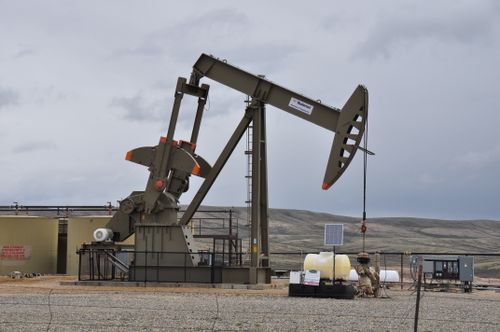
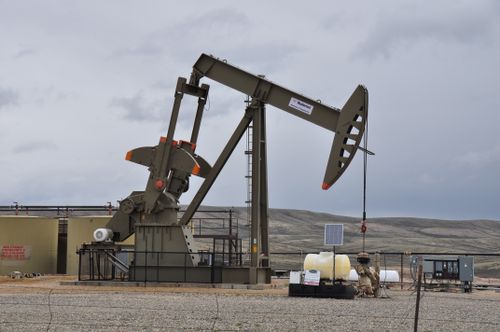
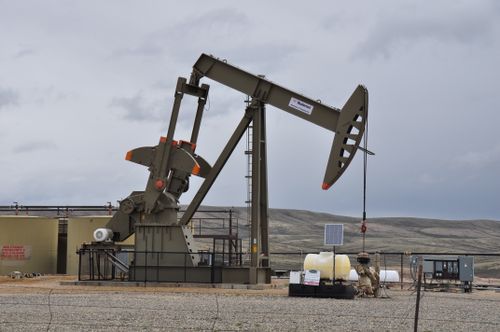
There’s a number that should be on the front page of every newspaper in America this morning, and it isn’t the price of oil. It’s the price of diesel. For the first time ever, diesel fuel is selling above six dollars a gallon in the United States. Diesel futures sit at an all-time high. And diesel, as Axios’s Matt Phillips wrote this week, is “a key input for virtually anything grown or transported in the US” — which makes it, quietly, one of the most inflationary forces in the entire economy.
Let me start with the human picture, because the barrel counts can wait. Picture a family-owned trucking company in Ohio — three rigs, a husband-and-wife team in the office, a son learning the routes. Every one of those trucks burns diesel the way we burn air: constantly, necessarily, expensively. When diesel crosses six dollars a gallon, that family’s fuel bill doesn’t just rise — it detonates. And they can’t simply absorb it. So the cost gets passed along, load by load, to the grocery distributor, to the warehouse, to the store shelf, to you. The long-predicted energy shock, Phillips wrote, isn’t coming. It’s here. It’s in diesel.
Now the numbers behind it. U.S. benchmark crude spiked 8 percent on Thursday alone, “leapfrogging the $100 mark to $103 a barrel,” in Phillips’ vivid phrase. Brent crude pushed past $107 — up 6.3 percent in a single day, per Finimize, and up 22.5 percent from a month ago, per the Daily Upside. Physical crude prices, Bloomberg reported, are trading above $120 a barrel. Brent is back above $100 for the first time since July. And the drivers are all too real: the resumption of U.S.-Iran strikes in the Persian Gulf, intensified attacks around the Strait of Hormuz — the narrow waterway through which a huge share of the world’s oil flows — and escalating fighting between Houthi forces and Saudi Arabia.
The consumer feels it first at the pump. Gasoline prices climbed 3.9 percent in August alone and are up 27.4 percent from a year ago, according to the Labor Department’s inflation report — “fueled largely by the war in Iran,” as Morning Brew’s Dave Lozo wrote. The Wall Street Journal reported that U.S. gasoline and diesel prices hit fresh records over Labor Day weekend. For a working family, that’s not an abstraction. That’s the difference between filling the tank and filling it halfway. That’s the school-year budget, redrawn.
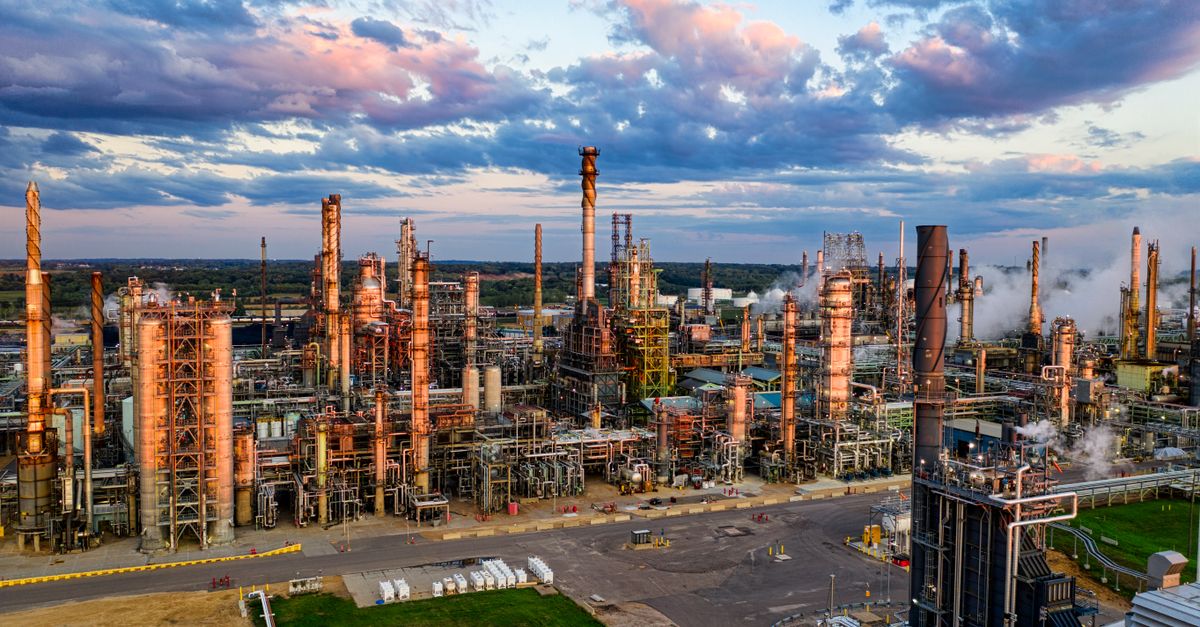
But diesel is where the real economic damage lives, because diesel doesn’t just move cars — it moves everything. The farmer’s tractor. The freight train. The cargo ship. The delivery van bringing packages to your door. When diesel futures hit all-time highs, as Axios’s Emily Peck reported this week (“the price of diesel fuel futures is now sitting at an all-time high”), every link in every supply chain gets more expensive at once. Finimize added the structural detail: wars in Iran and Ukraine have damaged oil refineries, squeezing the very facilities that turn crude into the diesel the economy runs on. This isn’t just expensive oil. It’s expensive oil meeting damaged refining capacity — a double blow.
Europe is feeling its own version. Natural gas prices there are at their highest since late 2022, with winter approaching and gas storage at its lowest level for this time of year in fifteen years. Record heatwaves are damaging crops on top of it. The energy shock is not an American story or a European story. It’s a global one, written in the language of molecules and megawatts.
And here is where it connects to everything else we’ve been reading this week. The bond market selloff — the ten-year Treasury brushing 5 percent — is being driven partly by this exact shock. Oil above $100 feeds inflation expectations; inflation expectations feed bond yields; bond yields feed mortgage rates, auto loans, and credit cards. The energy shock doesn’t stay in the energy sector. It metastasizes through the entire financial system, which is why the Fed is expected to hike rates on Wednesday and why your borrowing costs keep climbing.
It’s not enough to just grumble at the pump and wait for prices to come back down. It’s not enough to treat energy as something that happens to us, a force of nature beyond our influence. We must listen to what the diesel price is really telling us — that the global economy still runs on fuel, that wars have invoices, and that every gallon carries the cost of the world’s unresolved conflicts — learn to build our household and business budgets with energy volatility as a permanent assumption rather than a temporary surprise, and contribute to the steady, unglamorous work of efficiency: the better routes, the fuller trucks, the homes that sip rather than gulp.
There is hope here, if we’re willing to see it. High energy prices are history’s most reliable accelerant for innovation. They make the electric delivery van pencil out. They make the heat pump a bargain. They make the factory’s efficiency upgrade pay for itself in months instead of years. Every energy shock plants the seeds of the next energy transition — not out of idealism, but out of arithmetic.
And there is community in it, too. The Ohio trucking family isn’t alone; they’re part of a vast, interdependent web of growers, haulers, warehouses, and stores, all adjusting together, all passing costs and absorbing what they can. That’s what an economy actually is — not the numbers on a screen, but people finding ways to keep things moving when moving gets expensive.
Six-dollar diesel. All-time-high futures. A hundred-and-seven-dollar barrel. These are not just statistics. They are the price of a world that hasn’t yet figured out how to move without burning — and a reminder that every one of us, in the choices we make about how we travel, what we buy, and how we heat our homes, is part of the answer.
The shock is here. The question is what we build with it.
Written from the September 11–14, 2026 editions of Axios Markets, Finimize, the Daily Upside, Morning Brew, Bloomberg’s morning coverage, and WSJ What’s News. Prices and statistics are as reported by those outlets; my reflections are my own take.