
Friday closed the way most trading weeks end these days, with everything hanging on one number. That number was 29,000, the count of jobs the U.S. economy added in September, and Wall Street decided it liked what it heard. The Nasdaq Composite climbed 1.2% on Friday, touching an intraday high of 27,354 before settling just shy of its September 22 record close of 27,244. The S&P 500 rose 0.7% and the Dow Jones Industrial Average added 251 points, or 0.5%.
For the week, the Nasdaq managed a 0.4% gain, its third straight winning week. The S&P 500 and the Dow both finished the week lower.
The morning belonged to the Labor Department. Employers added just 29,000 jobs in September, far short of the roughly 85,000 economists had expected, and the unemployment rate ticked up to 4.2% from 4.1%. The revisions were worse than the headline: August’s gain was cut to 133,000 from 162,000, and July’s estimate swung from a 21,000-job gain to a 10,000-job loss. Combined, the two months erased 60,000 jobs from the summer’s books.
This is the rare kind of weak report that cheers traders. It was soft enough to take an October rate hike off the table but not weak enough to scream recession. Traders now see only a 23% to 24% chance that the Federal Reserve raises rates at its October meeting, down from 64% a week ago, according to the CME FedWatch tool. “The likelihood of an October pause was already high, with this print nudging up those chances,” Bradford Smith, a portfolio manager at Janus Henderson Investors, said in emailed commentary. “Still, employment remains at full employment levels, leaving the Fed myopically focused on its inflation fight.”
The bond market told a more complicated story. The 10-year Treasury yield sank as low as 5.16% right after the report, then reversed and finished at 5.28%, a day after touching a 24-year high near 5.35%. The 2-year yield ended at 4.82% and the 30-year at 5.63%. The unease is not only American: France’s two-year yields jumped to their highest level since 2008.
Chip stocks carried the day. Teradyne surged nearly 9%, clearing a trendline entry at 419.37. Nvidia broke out above a 234.76 buy point. Arm rose 5.7% and Marvell added 4%. Taiwan Semiconductor picked up 3% and ASML gapped up more than 3%. Monolithic Power and SiTime each popped about 6%.
The losers had their own stories. Nike slumped after projecting a bigger slide in sales this fiscal year than analysts expected. Seagate plunged 12% and Western Digital fell 10% on reports that rival Toshiba plans a major expansion in hard-disk-drive production. Synaptics jumped 13% on its revised takeover deal. Tesla added about 2% after reporting third-quarter deliveries of more than 486,000 vehicles, above the roughly 462,000 analysts had expected.
Ten of the 11 S&P 500 sectors finished higher, with consumer discretionary leading at more than 1%. Health care was the lone decliner. The small-cap Russell 2000 added 1%.
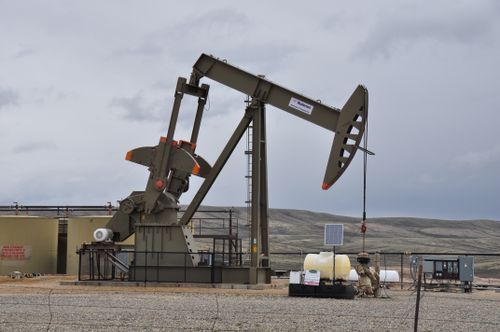
Energy traded its own drama. West Texas Intermediate crude fell 1.9% to $91.11 a barrel after the Group of Seven agreed to release 100 million barrels of crude and fuel from emergency stocks with allied nations, a move that appears to end the threat of a U.S. diesel export ban. Exxon Mobil recovered from an early drop to finish up 0.2%, while refiner Valero closed down just 1% after falling more than 4%. Bitcoin hovered near $84,200.
Beneath the green finish lines sits a warning worth carrying into next week. The S&P 500’s equal-weight index, which treats every stock the same regardless of size, fell for a seventh straight week, something that has not happened since 2022. The headlines are at records. The average stock is not.
Next week’s calendar is light: services-sector data on Monday, minutes from the Fed’s September meeting on Wednesday, and a preliminary read on consumer sentiment on Friday. The real test waits later in October, with the September inflation report due October 14 and the Fed’s next decision wrapping up October 28.