Three billion dollars. Let that number sit with you for a moment. It is more than the GDP of some small countries. It could fund a mid-sized city’s budget for a year. And this week, one man gave it away to a university.
Citadel founder Ken Griffin announced he will donate 2 billion dollars to establish a Miami campus of Carnegie Mellon University, plus 1 billion dollars to the Pittsburgh flagship, a combined 3 billion dollars that the school calls the largest private gift in the history of higher education. The Miami campus is targeting a 2028 opening with capacity for 3,500 undergraduate, master’s and PhD students, focused on what the school calls nontraditional offerings in human health, climate adaptation and national security. Griffin is separately spending 2.5 billion dollars developing Citadel’s Miami corporate campus.
This is not just a philanthropy story. It is a story about where financial power is moving in America, and what happens when one billionaire decides to build the future he wants to live in.
The making of a finance capital
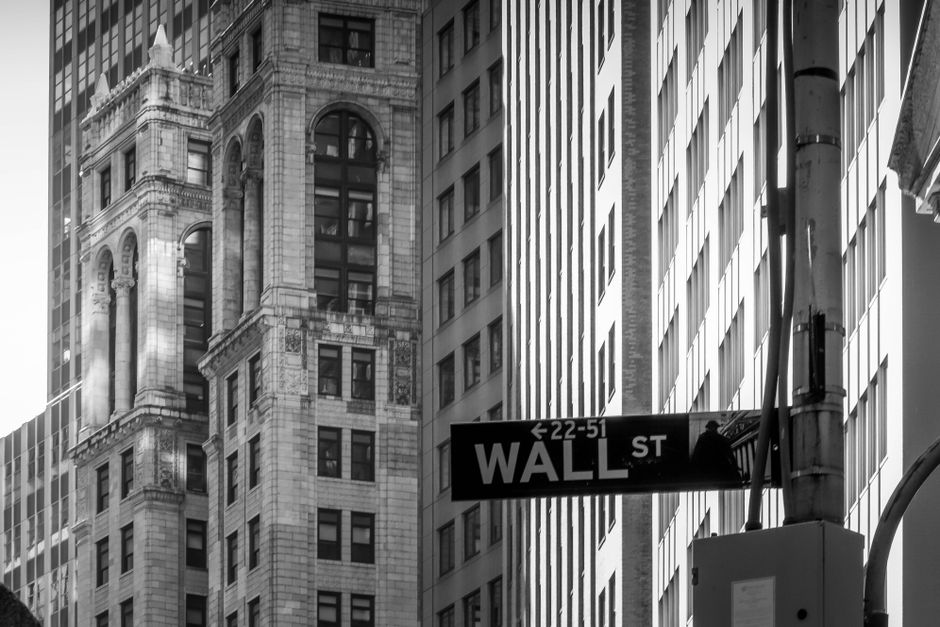
To understand the gift, you have to understand Miami’s transformation. For most of its history, Miami was a tourism and retirement town with a finance scene that punched below its weight. Then came the pandemic years, when remote work untethered Wall Street from Manhattan, Florida’s tax climate looked increasingly attractive, and a wave of hedge funds and financial firms began planting flags in South Florida. Griffin moved Citadel’s headquarters from Chicago to Miami in 2022, the highest-profile defection in a migration that reshaped the industry’s geography.
The 2.5 billion dollar Citadel corporate campus now rising in Miami is the physical headquarters of that bet. But a financial capital needs more than office towers. It needs talent, and talent needs universities. New York has Columbia and NYU feeding its banks. Boston has Harvard and MIT feeding its asset managers. Miami had sunshine and low taxes, but not the academic engine that produces the quantitative researchers, engineers and computer scientists a modern hedge fund consumes by the hundreds.
Griffin’s gift is the missing piece. A Carnegie Mellon campus in Miami, with 3,500 students focused on human health, climate adaptation and national security, is not a liberal arts college. It is a talent pipeline, aimed squarely at the industries Griffin cares about: technology, defense-adjacent research, and the kind of applied science that feeds both finance and national competitiveness. The largest private gift in higher-education history is, among other things, a workforce development project for the city Griffin is building.
The philanthropy math
It is worth pausing on the scale. University mega-gifts have been growing for years, but 3 billion dollars shatters the previous records. For perspective, the entire endowment of many excellent universities is smaller than this single donation. Carnegie Mellon, a world-class institution that has always punched above its endowment weight, is being transformed overnight into something much larger.
The structure of the gift is as interesting as its size. Two billion for the new Miami campus, one billion for Pittsburgh. That ratio tells you where Griffin sees the growth. Pittsburgh gets the larger share of honor, the flagship strengthened. Miami gets the larger share of money, the future built. It is a hedge, in the most literal sense: honoring the institution’s roots while betting its expansion on the city where Griffin has placed his own firm’s future.
Philanthropy at this scale also raises honest questions, and a warm telling of this story should not skip them. When one donor can reshape a major university’s trajectory, whose priorities does the university serve? The focus areas, human health, climate adaptation, national security, are unimpeachable on their face, and they also align neatly with the interests of a defense-adjacent, technology-heavy financial empire. That alignment does not make the gift cynical. But it is worth noticing that the line between philanthropy and strategy, between giving and building, has rarely been thinner.
What it means for everyone else
You might be reading this in Nashville, or Lagos, or anywhere far from Miami’s construction cranes, wondering what a billionaire’s university gift has to do with your money. More than you might think.
First, it confirms the geographic diversification of American finance as a durable trend, not a pandemic blip. When the biggest gifts in educational history follow the money to Miami, the money is not going back to Manhattan. For young people choosing where to build careers in finance and technology, the map now has more than one dot that matters. For cities, the lesson is that talent infrastructure, universities, research, quality of life, is what converts a tax advantage into a permanent ecosystem.
Second, it is a case study in how the ultra-wealthy deploy capital for impact. Griffin could have bought superyachts or sports teams. Instead he is buying a university campus and a corporate headquarters, investments that compound over decades. Whatever you think of billionaires, there is a lesson in the time horizon: the highest-return investments are often the ones measured in generations, not quarters. Your version of that principle is the 529 plan, the retirement account, the skills you build in your twenties that pay off in your forties.
Third, watch what gets built in Miami over the next five years. A 3,500-student research campus opening in 2028, a 2.5 billion dollar corporate headquarters, and the network effects between them will create a genuine innovation cluster. Real estate, local businesses, and regional banks will feel it. Economic development used to be the work of governments offering tax breaks. Increasingly, it is the work of individuals writing checks with nine zeros.
Ken Griffin is building the city he wants, the university he wants, and the talent pipeline his industry wants, all at once. Three billion dollars is a staggering gift. It is also a window into how power works now: not just earned and invested, but placed, deliberately, like pieces on a board. The rest of us get to watch the board change, and to decide where we want to stand when it does.